Traditional Cuisine and Cooking in Pondoland
In Pondoland, food is about community, tradition, and sharing. A guide to the dishes, flavours, and cooking styles you'll encounter on the Mtentu Ramble.
 Allan Hein9 June 2025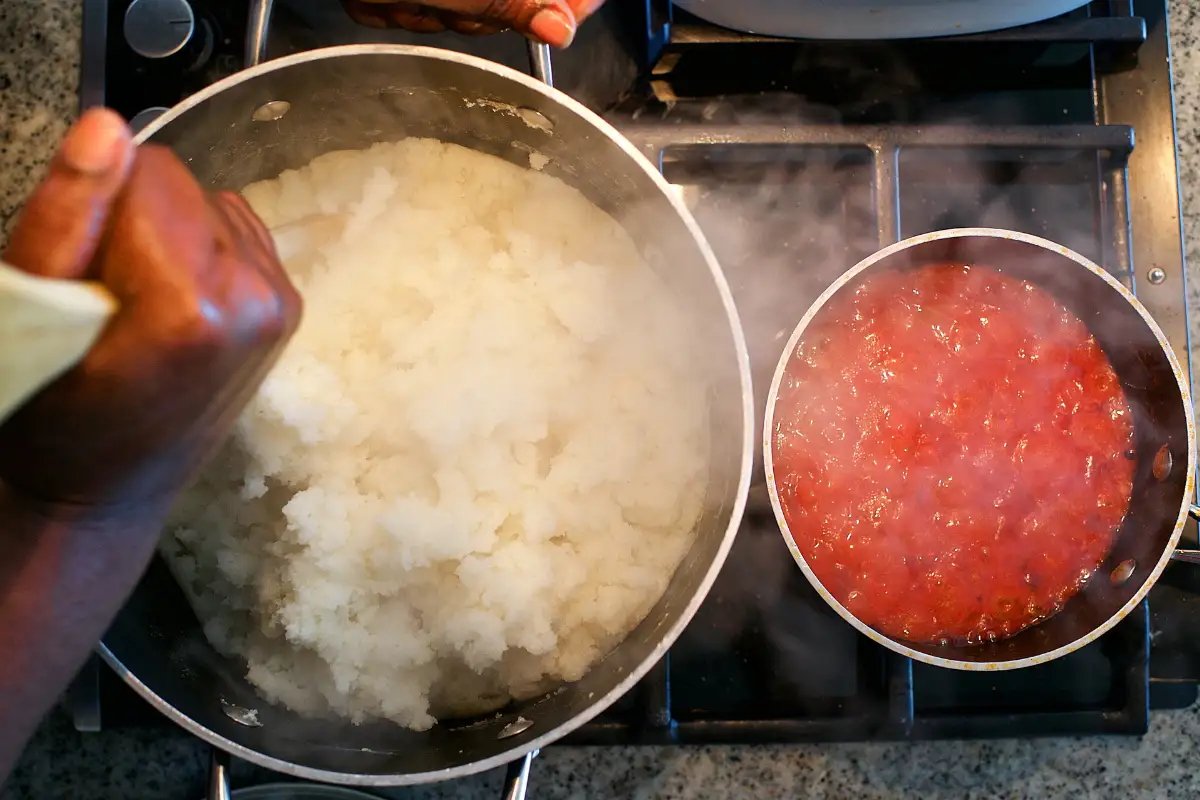
In Pondoland, food isn't just about eating; it's about community, tradition, and sharing. I learned that the first time I sat around a fire at Mnyameni and was passed a plate of pap and stew by someone I'd only just met. There was nothing fancy about it: just good food, made with care, shared without fuss. That meal stuck with me.
Meals here are often prepared over open fires, served communally, and made with ingredients grown or gathered locally. For hikers along the Wild Coast, tasting these dishes is one of the most authentic ways to connect with the amaMpondo people.
Here's a guide to the flavours, dishes, and cooking styles you're likely to encounter on your Mtentu Ramble journey.
Table of Contents
Mpondo Bread (idombolo / isonka samanzi)
The heart of Pondoland hospitality. This steamed or fire-baked bread is soft, slightly sweet, and dense in the way that only bread made over a fire can be. It has a faint earthiness from the steam and a crust that forms in the pot rather than in an oven.
On the first night of the hike, it arrives at the table warm, usually wrapped in a cloth, and is gone within minutes. I've never seen a group not reach for a second piece. Served with strong tea on arrival, it's the first taste of Mnyameni village and, for most hikers, the meal they describe first when they get home.
The name varies by family: idombolo for the steamed version, isonka samanzi (water bread) for a slightly different baked style. Either way, the principle is the same: simple ingredients, slow heat, someone's careful hands.
Learn more: Cultural Homestay Experience →
What is pap?
Pap, a porridge made from maize meal, is the foundation of almost every meal in Pondoland. It comes in two forms, and they feel like completely different foods:
- Soft pap (slap pap): thin, smooth, and creamy for breakfast, eaten with sugar and milk or butter.
- Stiff pap (stywe pap): thick and firm for dinner, scooped with the fingers, rolled into a ball, and pressed into stew or relish to carry the flavour.
The eating-with-hands part surprises some hikers. Your guide will show you the technique: pinch off a small piece, press it into a shallow bowl shape with your thumb, and use it to scoop. Within one meal most people have it. By the second day, nobody thinks twice about it.
Pap has no pretensions. It fills you up, absorbs whatever it's paired with, and has been feeding families along this coastline for generations.
Chakalaka and Stews
Chakalaka is the relish that makes pap sing: a spiced mixture of beans, tomatoes, onion, and peppers, cooked down until it's thick and fragrant. Every family has their own version. Some are mild, some have a serious kick. Either way it's one of those flavours that is immediately recognisable as South African.
The meat stews are something else entirely. Goat is most traditional, slow-cooked in the three-legged pot with vegetables, bay, and whatever seasoning the cook has at hand. The smell reaches you before the food does. By the time it arrives at the table, after three or four hours over coals, the meat is falling off the bone. This is the centrepiece of a celebratory meal in Pondoland, and on the first night of the hike, after 18 km on your feet, it tastes like the best thing you've ever eaten.
Wild Greens (Imifino)
Foraged or garden-grown leafy greens are simmered into nourishing stews, often flavoured with onion, chilli, and sometimes peanut. These dishes connect families to the land, changing with the seasons.
Fresh Fish and Coastal Flavours
Living by the ocean means fish often finds its way onto the plate:
- Shad (elf) and garrick (leerfish), grilled or fried.
- Mussels and oysters, gathered from rocks at low tide.
- Fish is often served with a squeeze of lemon or fire-grilled for smoky flavour.
See more: Fishing at Mtentu →
What is umqombothi?
Thick, slightly sour, and made from maize and sorghum, umqombothi isn’t a drink for every day, it’s for ceremony.
Brewed in large clay pots, it’s shared at weddings, community gatherings, and ancestor ceremonies. It’s rich, social, and a reminder that in Pondoland, food and drink are never separate from meaning.
Cooking Methods
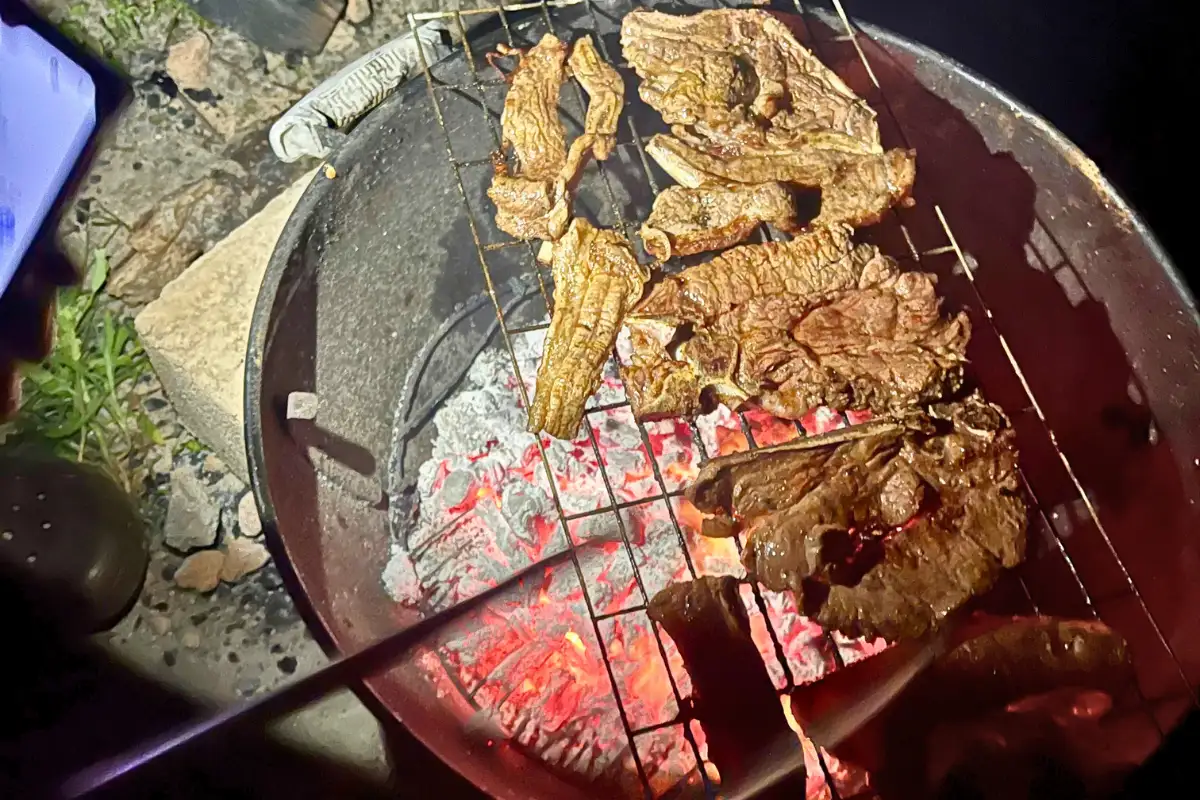
Chicken and steak grilling over glowing red coals on a traditional South African braai in Pondoland
- Open fires and three-legged pots (potjie): Most meals are slow-cooked over fire, with smoke lending its flavour.
- Cast iron pans: Used for breads and quick-fried foods.
- Communal serving: Meals are eaten together, often from shared dishes, reinforcing connection.
Hospitality and Rituals Around Food
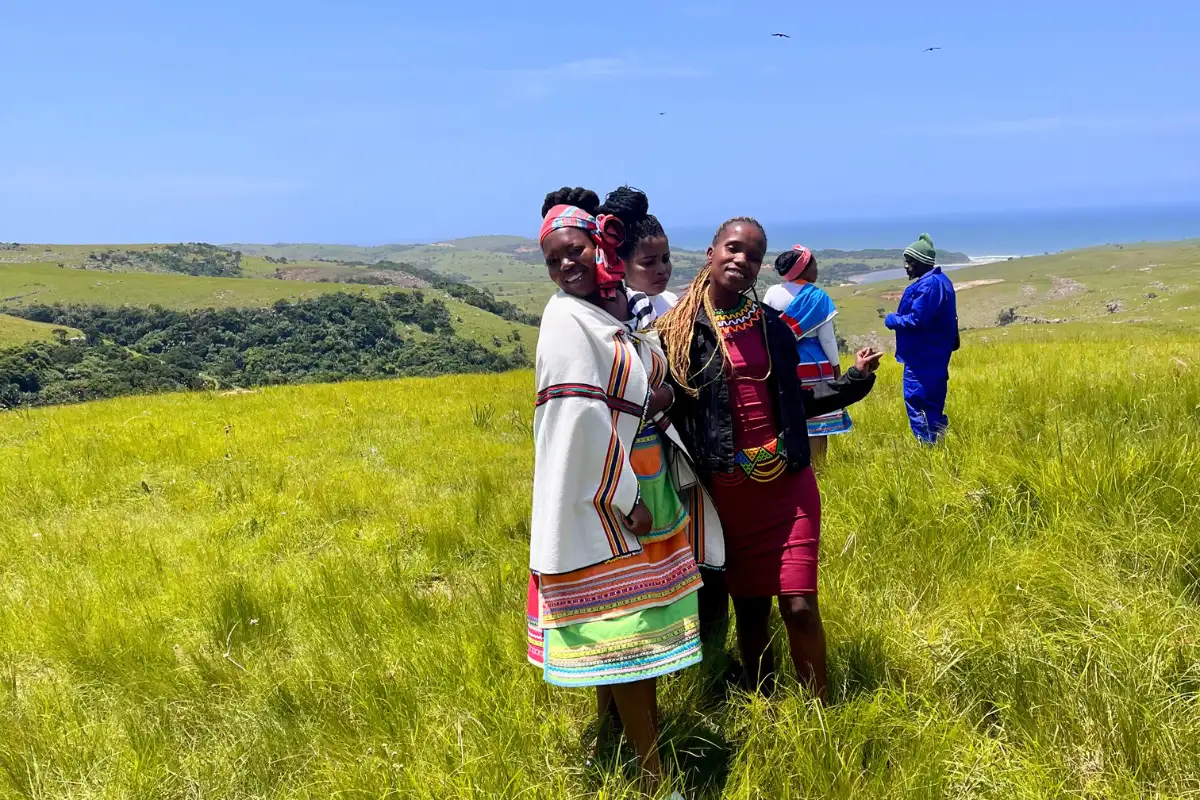
Three Pondo women in traditional colourful dress standing in green coastal grassland above the Wild Coast, Eastern Cape
In Pondoland, food is a welcome made visible.
Even if a family has little, a guest will always be offered something, tea, bread, or a bowl of stew.
Refusing food outright is rare; taking at least a taste, with gratitude, is a sign of respect. It’s how strangers become friends, and how visitors stop being visitors.
What do you eat on the Mtentu Ramble?
Expect hearty, freshly cooked Pondoland food: pap, stew, wild greens, and bread at the homestay, a braai option at the Hiking Shack, and packed lunches on the trail. Here's a rough idea of what to expect, day by day:
Day 1 starts with a packed breakfast or a stop before the trailhead, then a packed lunch eaten somewhere on the trail with a view that makes even a sandwich taste better than it should. Dinner is at the Mnyameni homestay: pap, stew, wild greens, and bread. Always bread.
Day 2 brings a village breakfast, a long morning through the Red Dunes, and a packed lunch on the trail or at the Hiking Shack. Dinner at the Hiking Shack is more varied: the team there cooks for groups with a wider range of ingredients, and there's often a braai option.
Day 3 includes breakfast at the Hiking Shack, a packed lunch eaten near the waterfalls in Mkhambathi, and a final dinner back at the Shack with your choice of drink included.
All meals from Day 1 breakfast to Day 3 dinner are included in the hike fee. Everything is freshly prepared. Nothing comes out of a packet. (See the full day-by-day hike breakdown →)
FAQs
What is Mpondo bread?
A steamed or fire-baked bread that is soft, slightly sweet, and dense in the way only bread cooked over a fire can be. It is known as idombolo when steamed and isonka samanzi (water bread) when baked, and on the first night of the hike it is usually gone within minutes.
Do you eat with your hands in Pondoland?
Often, yes. Stiff pap is scooped with the fingers, pressed into a shallow bowl shape with your thumb and used to scoop up stew or relish. Your guide will show you the technique, and by the second day nobody thinks twice about it.
Are meals included on the Mtentu Ramble?
Yes. All meals from Day 1 breakfast to Day 3 dinner are included in the hike fee, everything freshly prepared, nothing out of a packet.
Tasting the Wild Coast
When you hike with us, meals are more than fuel; they're part of the experience. From bread fresh off the fire at a homestay to packed hiking meals at a waterfall, you'll taste Pondoland's culture in every bite.
At Mtentu Ramble, we weave traditional cooking into your journey so that food becomes a memory as vivid as the landscapes.
Food in Pondoland has its own identity.
It connects generations, honours the land, and fills both the plate and the heart.
So when you sit down at the Mtentu Homestay, steam rising from the pot, and someone offers you bread fresh off the fire, don’t think of it as dinner. Think of it as an invitation to slow down, to listen, and to taste a story that’s been simmering for centuries.
Plan your adventure: read more about the Mtentu Ramble, the Mtentu Homestay, and the hot bucket showers that end each hiking day in true Wild Coast style.
Ready to Experience This Yourself?
The Wild Coast is waiting. Book your guided hike with Mtentu Ramble and create memories that will last a lifetime.