Indigenous Plants and Wildlife on the Wild Coast: Pondoland's Living Landscape
Walk through one of South Africa's richest biodiversity hotspots. Discover endemic palms, Cape Vultures, and rare flora on the trails near Mtentu, Eastern Cape.
 Allan Hein19 May 2025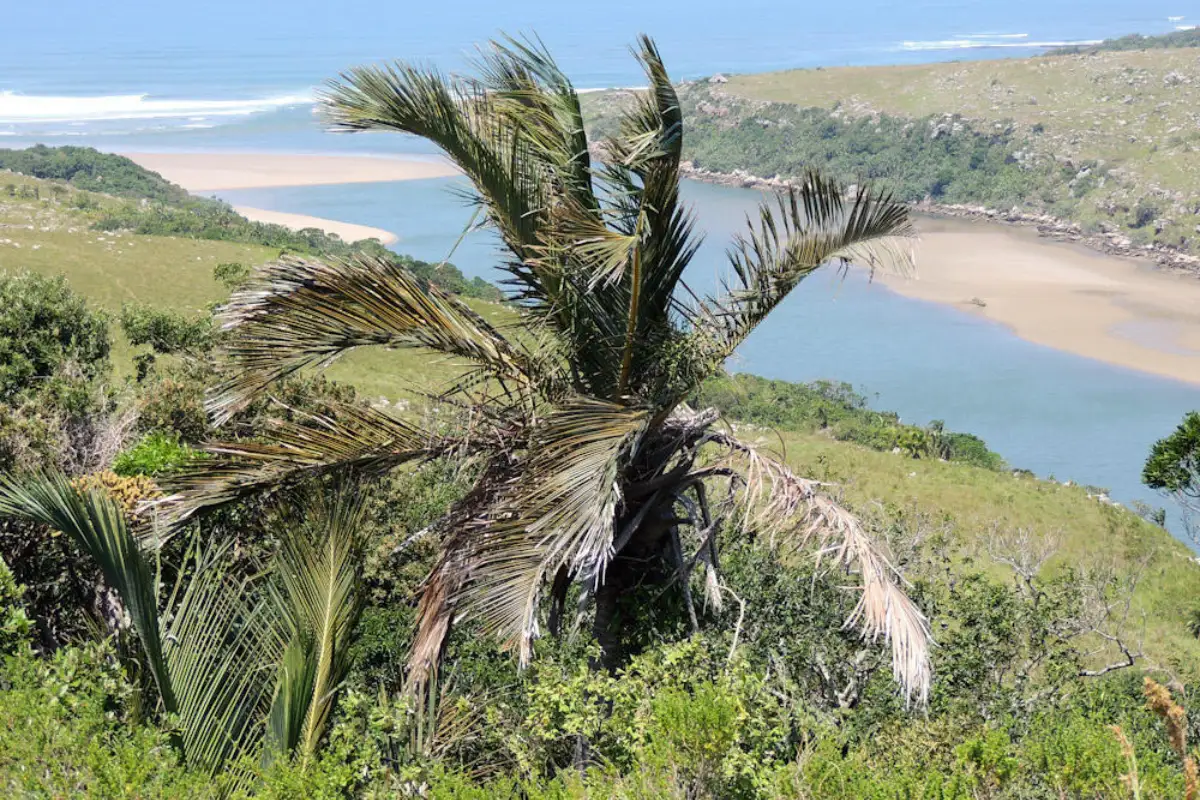
The trails around Mtentu feel alive. Every step brings a new birdcall, a flash of colour, or a plant you've never seen before. I've been walking this coastline for years and I'm still learning the names of things.
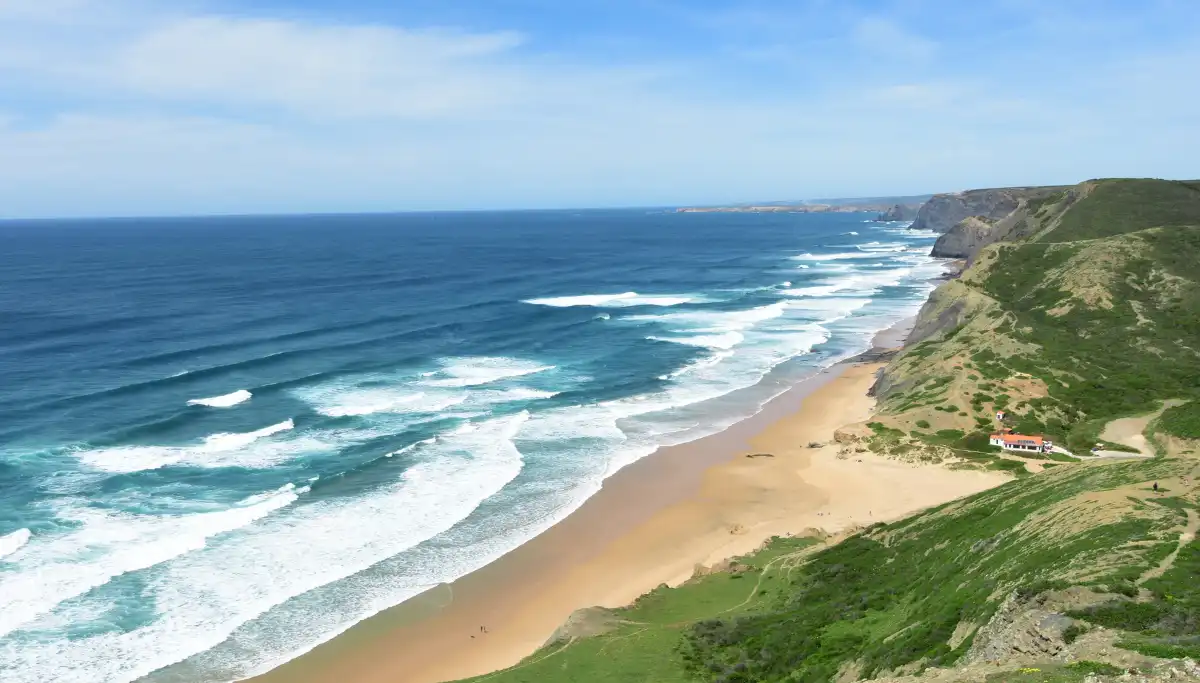
This corner of the Wild Coast sits within the Pondoland Centre of Endemism, one of the richest biodiversity hotspots in South Africa. You won't just be walking past greenery, you'll be moving through a living landscape where rare plants and animals still thrive.
Table of Contents
- Plants That Define the Landscape
- Grasslands and wildflowers
- Mkambati palm
- Pondo palm and endemic shrubs
- Red dunes vegetation
- Birds of the Wild Coast
- Cape vulture colony
- Birds of the grasslands
- Forest and river birds
- Mammals You Might Encounter
- Amphibians and Reptiles
- Best Time of Year for Wildlife and Plants
- How to Make the Most of It
- FAQs
- Every Trail Is a Discovery
Plants That Define the Landscape
Grasslands and wildflowers
Much of the terrain is open grassland, and in spring and summer it comes alive. The ground is scattered with wildflowers, low-growing blooms in yellow, purple, and white that attract sunbirds, Cape sugarbirds, and butterflies in numbers that stop hikers mid-stride.
The one that always gets pointed out is the strelitzia, the bird-of-paradise flower: vivid orange and blue, standing tall above the grass, unmistakable. They grow wild along the clifftops above the Indian Ocean, and the contrast between the flower and the blue sea behind it is one of those images that doesn't need a filter.
Mkambati palm
Along the rivers, you'll find the Mkambati palm (Jubaeopsis caffra), a species found nowhere else on earth. It forms dense, shady groves along the Mtentu and Msikaba rivers, its feathery fronds overhanging the water. Walk quietly through one of these groves and you'll usually find a malachite kingfisher working the edges, its electric blue catching the light between the palms.
The palm has been here far longer than any trail. Seeing it growing wild beside a river that hikers have been walking past for two days puts the Pondoland Centre of Endemism in concrete terms: rare, specific, irreplaceable.
Pondo palm and endemic shrubs
The Pondo palm (Raphia australis) is another icon, found only in Pondoland. Taller than the Mkambati palm, it thrives in moist gullies and ravines, its enormous leaves forming natural canopies in the gorges. Beneath them, the rare red milkwood and the false water-berry (Rhynchocalyx lawsonioides) grow in the shade, both endemic to this narrow strip of coastline.
For botanists, this stretch of coast is extraordinary. For everyone else, it's simply beautiful.
Red dunes vegetation
The Red Dunes of Mtentu look bare at first glance, but look closer. Hardy succulents grip the iron-red sand alongside low, wind-shaped shrubs that have adapted to shallow, ancient soils. The plant life here is as old as the landscape, and scattered among the roots and sand, stone tools from the Acheulean period lie where early humans left them 500,000 years ago. What grows here now has been growing alongside human presence for longer than most of us can imagine.
Birds of the Wild Coast
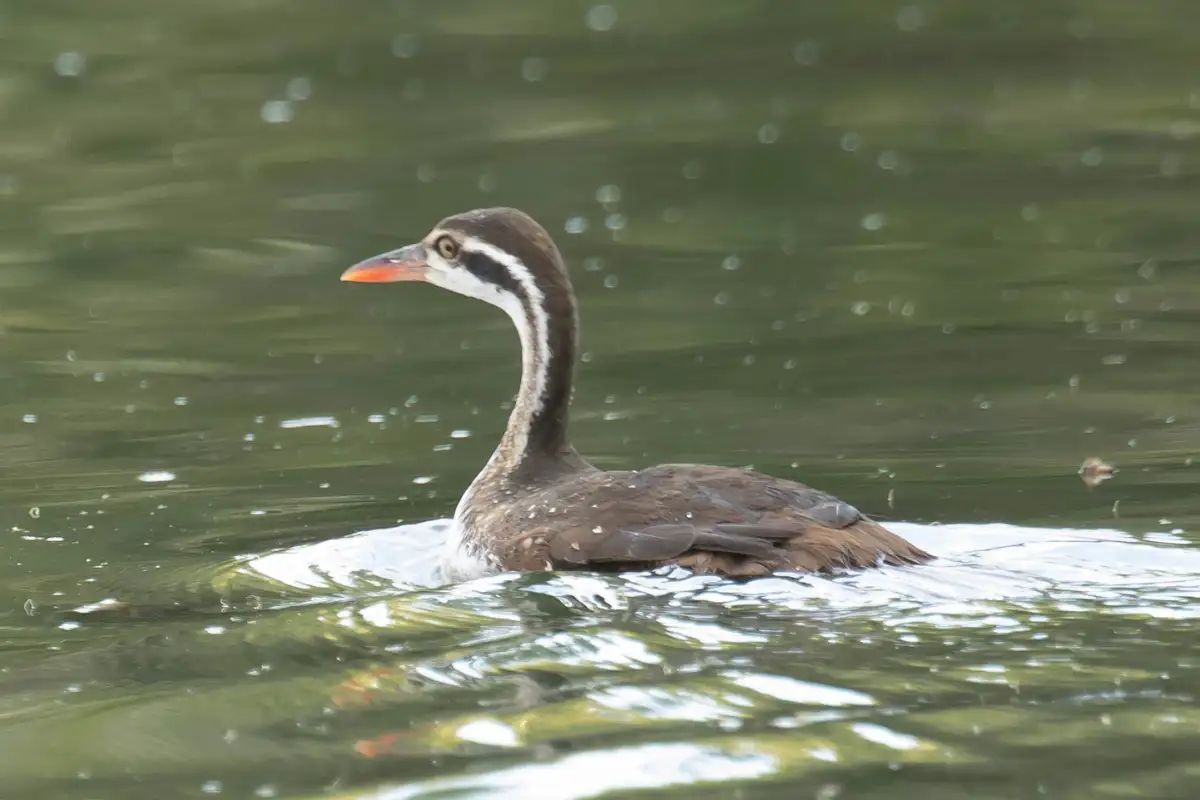
African Finfoot waterbird swimming on a calm river along the Wild Coast hiking trails near Mtentu
Cape vulture colony
One of the biggest highlights is the Cape vulture colony at Mkhambathi. Between 400 and 800 birds nest on the cliff faces here, and on a good morning the thermals above the reserve are full of them, wings locked, circling in slow spirals without a single wingbeat.
I've stood on that ridge more times than I can count and it doesn't get ordinary. The sound is what people don't expect: at close range you can hear air moving through primary feathers. It's a deep, papery rush. When a bird passes within twenty metres of you, banking on the wind, you feel the size of it in your chest. Wingspan up to 2.5 metres. Weight of a small dog. And utterly silent except for the feathers.
Birds of the grasslands
In the open stretches, you might spot:
- Red-shouldered widowbirds in breeding plumage, their tails trailing like ribbons.
- Yellow-throated longclaws, perched on grass stems and singing.
- Ground hornbills, huge and slow-moving, are often seen in pairs striding through the veld.
Forest and river birds
Down in the gorges, listen for the trumpeter hornbill, whose call echoes like laughter through the canopy. If you're lucky, you'll glimpse the African finfoot, a shy river bird, or hear the haunting cry of the African fish eagle.
Mammals You Might Encounter
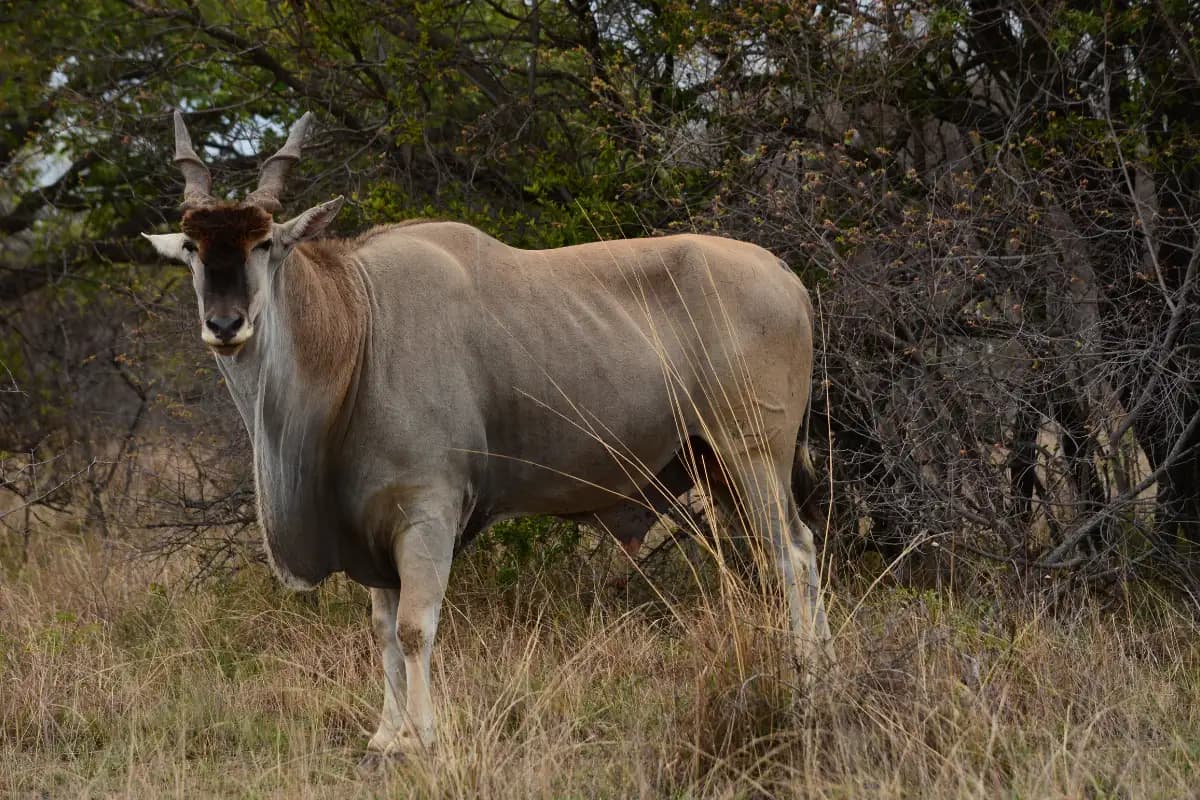
Large eland bull standing alert in dry grassland scrub at Mkambathi Nature Reserve Wild Coast South Africa
The grasslands of Mkambathi and Mtentu support large herbivores, some reintroduced, some naturally occurring.
- Eland: The largest antelope, often seen in small herds grazing the open fields.
- Red hartebeest and blesbok: Quick, sharp-faced antelope that keep their distance but stand out on the plains.
- Bushbuck and duiker: Shyer antelope that stick to the forest edges.
- Chacma baboons: Often noisy in troops near cliffs or beaches.
At night, smaller nocturnal mammals like jackals, civets, and mongoose are active, though harder to spot.
Amphibians and Reptiles
Because of the wetlands and rivers, frogs are everywhere after the rain. You might hear the plaintive rain frog or see the tiny yellow-striped reed frog clinging to reeds at dusk.
On land, snakes like the puff adder or the harmless brown egg-eater may be encountered. As always: watch your step, give wildlife space, and admire from afar.
Best Time of Year for Wildlife and Plants
The Wild Coast rewards visitors year-round, but what you see changes with the season:
- Spring (September-November): The grasslands are in full bloom, wildflowers are at their best, and migratory birds are arriving. The Mkambati palms are fruiting and the riverbanks are lush. This is the easiest season for birdwatching.
- Summer (December-February): Hot and occasionally wet. Frogs are everywhere after rain, butterflies are abundant, and the vegetation is intensely green. The Sardine Run (June-July, just before this window) attracts gannets, dolphins, and sharks offshore.
- Autumn (March-May): The grasslands begin to dry and go golden. Game viewing gets easier as vegetation thins. Cape vultures are active year-round but particularly visible on clear autumn days when the thermals are strong.
- Winter (June-August): Clear skies and excellent visibility for game and birds. Humpback whales migrate north along the coast between June and November, often visible from clifftops. Vegetation is lower, making it easier to spot mammals.
How to Make the Most of It
Binoculars are worth every gram of carry weight on this trail. The Cape vultures alone justify bringing a pair, but you'll use them on dolphins, kingfishers, and eland herds across the plains.
A bird field guide or the Merlin Bird ID app (download the South Africa pack before you leave signal range) helps with identification. The Wild Coast has over 250 recorded bird species and your guides will know many of them by call.
Most importantly: slow down at the good spots. The rivers, the cliff edges at Mkhambathi, the Mkambati palm groves. Wildlife reveals itself to people who stop moving, not to those who hurry through.
FAQs
What plants grow only on the Wild Coast?
The Mkambati palm (Jubaeopsis caffra), the Pondo palm (Raphia australis), and endemic shrubs like the false water-berry, all found nowhere else on Earth. This stretch of coast sits within the Pondoland Centre of Endemism, one of the richest biodiversity hotspots in South Africa.
Where can you see the Cape vulture colony?
On the cliff faces at Mkhambathi, where between 400 and 800 birds nest and circle in the thermals above the reserve.
When is the best time for birdwatching on the Wild Coast?
Spring (September to November) is the easiest season, when the grasslands bloom and migratory birds arrive. Cape vultures are active and visible year-round.
Do you need binoculars on the trail?
Yes, they are worth every gram of carry weight. You will use them on the Cape vultures, dolphins, kingfishers, and eland herds across the plains.
Every Trail Is a Discovery
Every trail here tells a different story, through the plants underfoot, the birds overhead, and the animals grazing the hillsides.
At Mtentu Ramble, we provide meals for your hikes and guides who know the land. All you need to do is walk with open eyes and let the coast surprise you.
Ready to Experience This Yourself?
The Wild Coast is waiting. Book your guided hike with Mtentu Ramble and create memories that will last a lifetime.