Mkhambathi Nature Reserve: Wild Coast Wilderness Guide (Waterfalls, Wildlife & How to Visit)
Your guide to Mkhambathi Nature Reserve: 7,720 hectares of Wild Coast wilderness with waterfalls into the sea, eland herds, rare plants, and amaPondo heritage.
 Allan Hein18 August 2025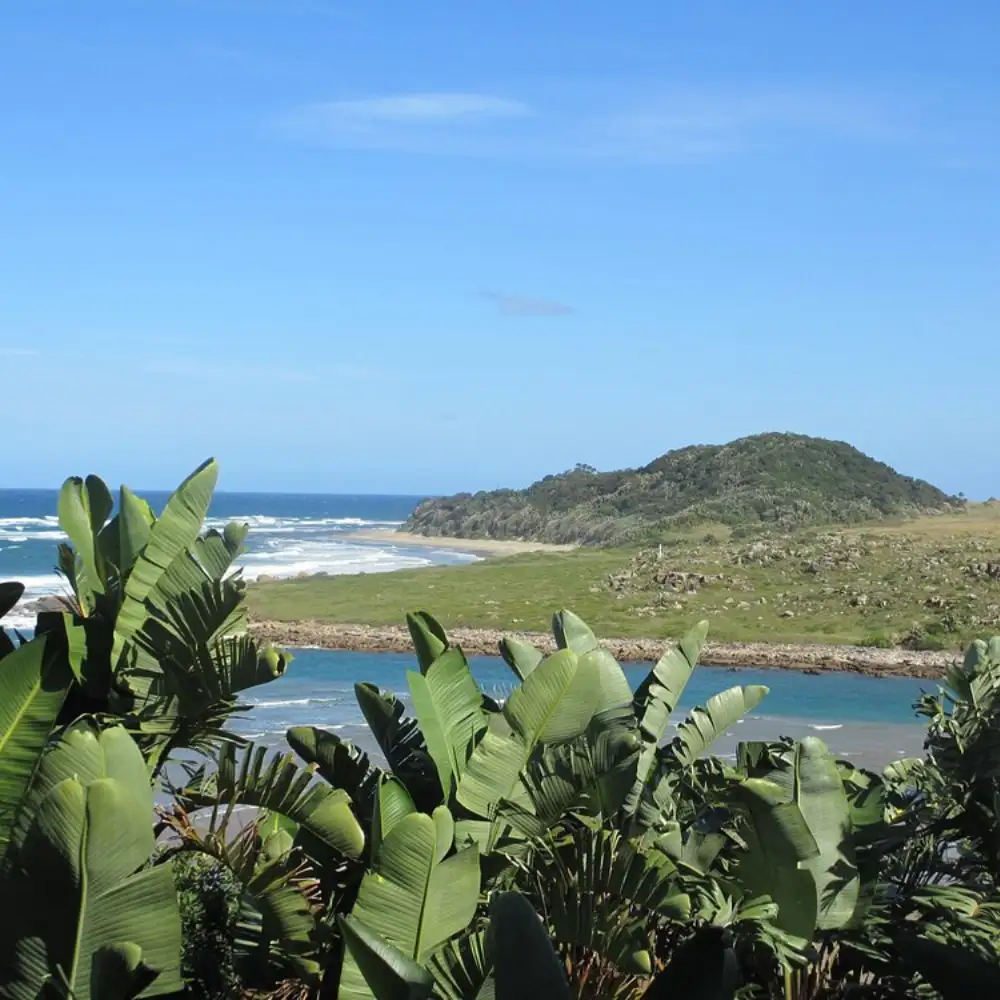
I've been crossing the Mtentu River into Mkhambathi for more than a decade, and it has never once felt ordinary. The moment you reach the other bank, something shifts. The grasslands open up, the sea appears on three sides, and you understand immediately that you are somewhere rare.
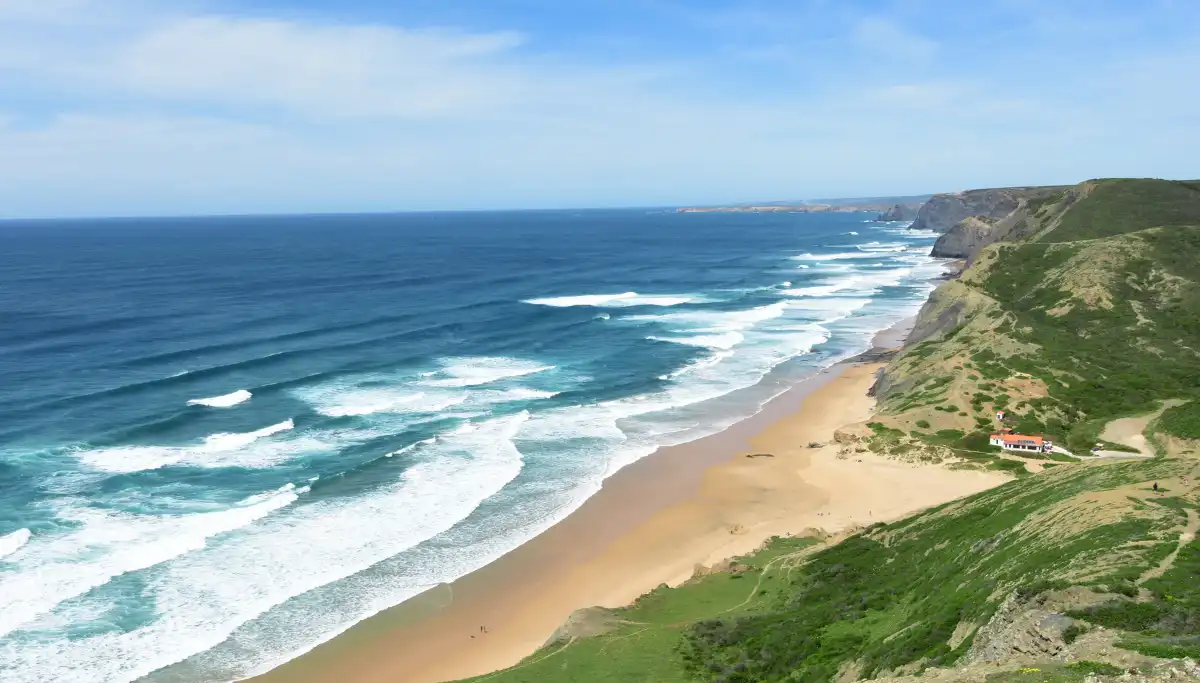
The Mkhambathi Nature Reserve is 7,720 hectares of pure Wild Coast wilderness, flanked by the Msikaba and Mtentu rivers, with a coastline that stretches for 10 km. Here, waterfalls plunge directly into the sea, herds of eland graze within sight of dolphins, and rare plants grow that can't be found anywhere else on Earth.
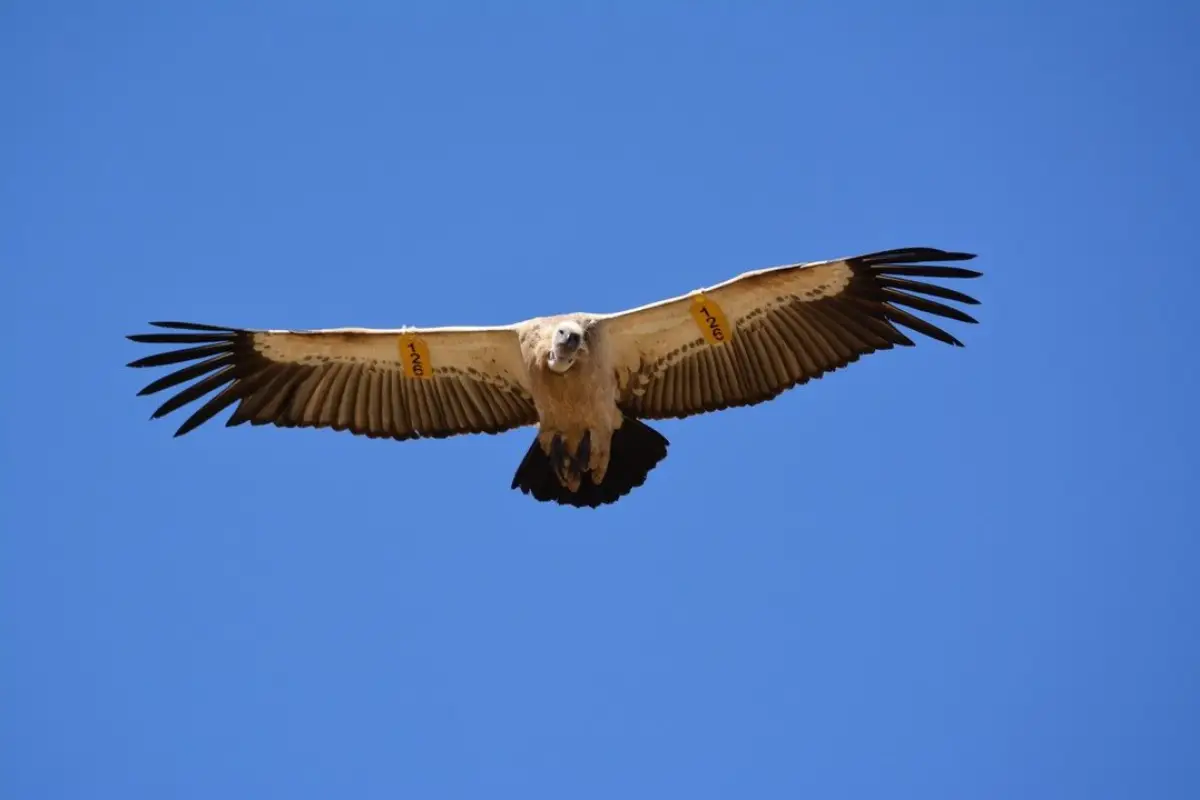
In 2015, the Cape Vulture, native to southern Africa, was classified as a regionally endangered species. One of the key conservation focuses for Cape Vultures in the Eastern Cape is the Msikaba vulture colony, where around 170 to 190 pairs typically nest on the cliffs of the Msikaba River Gorge.
And yet, Mkambati isn’t just about untamed landscapes; it’s about the people who have protected them for generations. The amaPondo community, whose ancestral land this has always been, now co-manages the reserve after a long and hard-fought restitution process. Their involvement ensures that every visit here supports both conservation and community livelihoods.
It’s this partnership that allows places like GweGwe Beach Lodge to exist, tourism done thoughtfully, with deep respect for the land.
Table of Contents
- Conservation and Community: The Green Griffons of Mkambati
- A Land Written in Rivers and Falls
- What Will You See in Mkhambathi?
- Grasslands Alive With Wildlife
- A Sky Full of Wings
- Plants Found Nowhere Else
- A Coastline of Stories and Shipwrecks
- People and Land: A Story of Restitution
- Beyond the Land: The Ocean Frontier
- What Is There to Do in Mkhambathi?
- What Should You Know Before Visiting Mkhambathi?
- Why Visit Mkhambathi With Mtentu Ramble?
- Book Your Trip Today
- FAQs
- Keep Exploring the Wild Coast
Conservation and Community: The Green Griffons of Mkambati
Conservation rangers handling a Cape griffon vulture on a dirt track at Mkambathi Nature Reserve Wild Coast
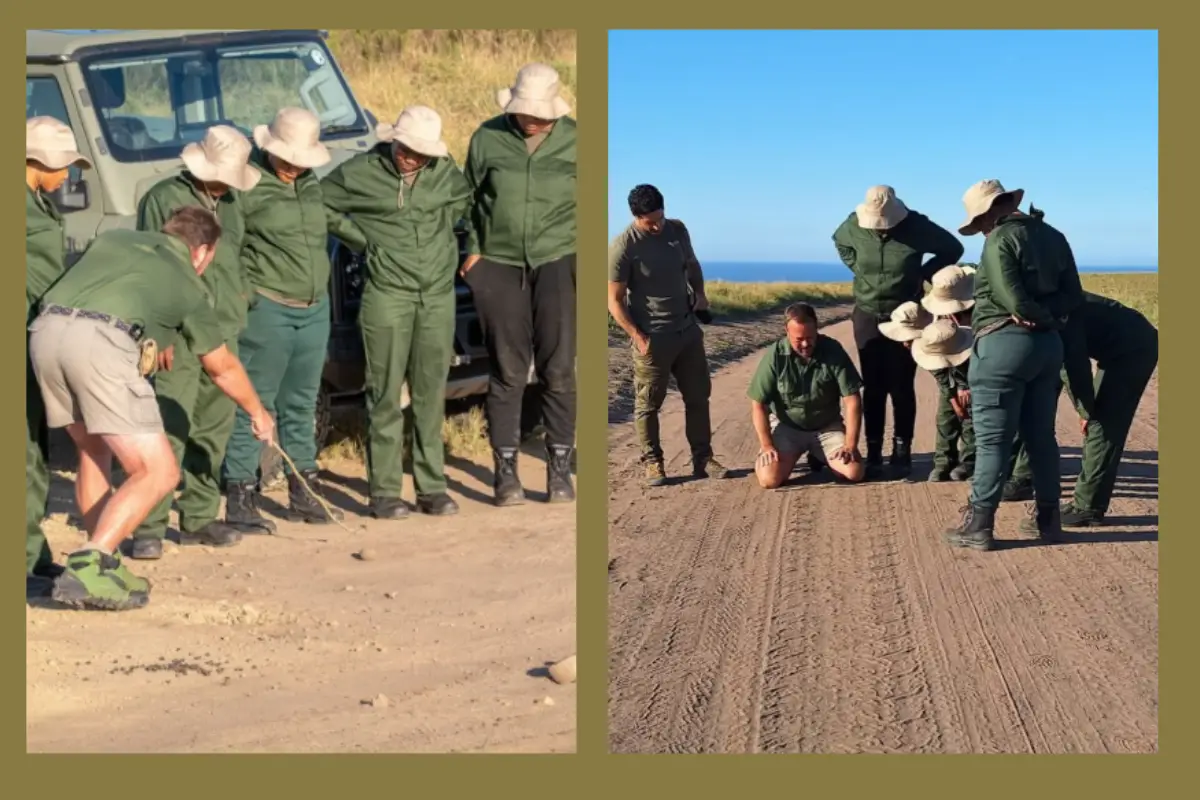
They also have an all-women anti-poaching unit, known as the Green Griffons, modelled on the award-winning Black Mambas in the Kruger. This dedicated team of twelve women from the local amaPondo community patrols the reserve’s 7,000-plus hectares of grassland, forest, and coastline.
Their work includes wildlife monitoring, species identification, de-snaring, and marine and coastal patrols. Acting as the vigilant eyes and ears of the reserve, they report directly to the Eastern Cape Parks and Tourism Agency (ECPTA) and local law enforcement when they detect signs of poaching or illegal activity.
The Green Griffons are more than rangers; they represent a new model of conservation, one that blends environmental protection with women’s empowerment and community pride. And at the heart of their mission lies a shared vision: the reintroduction of white rhino to Mkambati Nature Reserve. When that moment comes, it will stand as one of the Wild Coast’s greatest conservation success stories, a testament to what collaboration, courage, and care can achieve.
A Land Written in Rivers and Falls
Aerial view of the deep forested river gorge at Mkambathi Nature Reserve on South Africa's Wild Coast
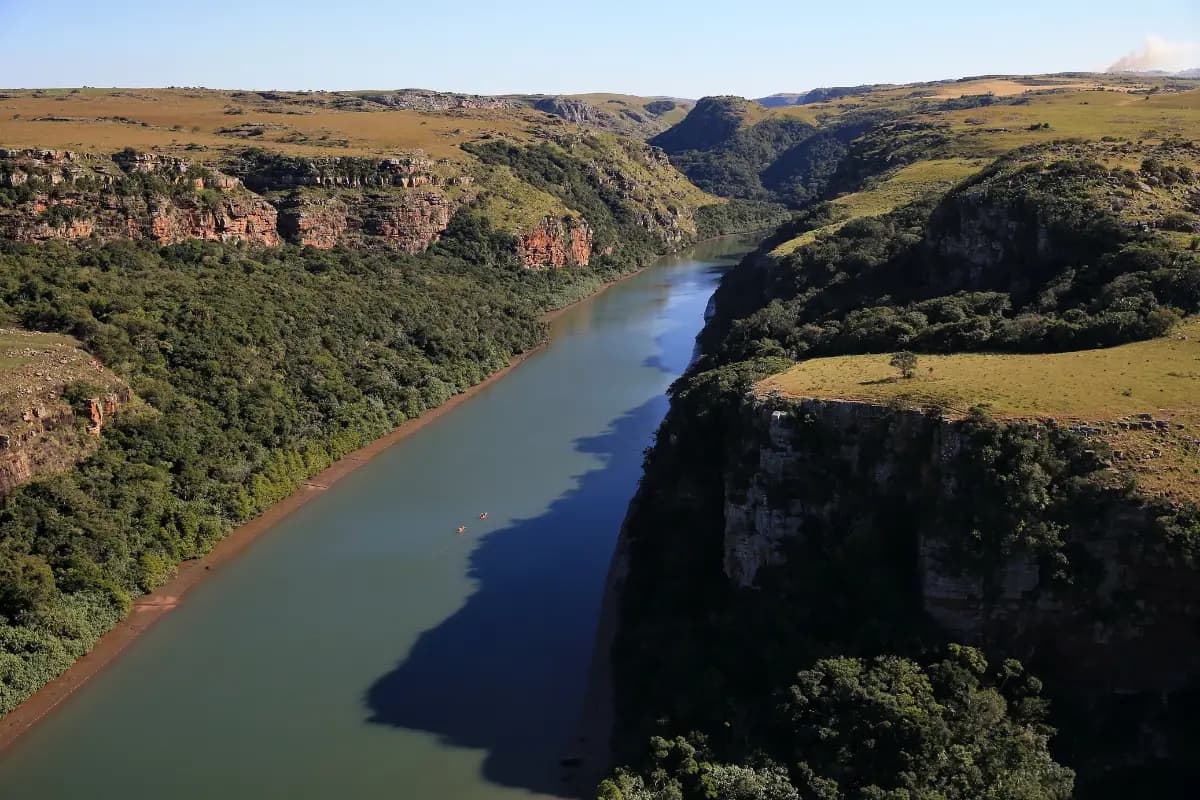
Two mighty rivers shape the reserve:
- To the north, the Mtentu River, whose estuary meets the ocean just below our lodge.
- To the south, the Msikaba River carves one of the most dramatic gorges in South Africa. The Msikaba River also has a Vulture colony located in the Mkambathi Nature Reserve. Known as the Collywobbles or Msikaba colony, it hosts breeding pairs of Cape Vultures on the cliffs along the river. That same gorge is where SANRAL is building what will be Africa's longest cable-stayed bridge, still years from completion: the current status of the N2 Wild Coast Road →
- The Pondoland Coconut also only grows on both of these rivers and only on the Northern Bank. This is the world's smallest coconut, equivalent in size to a ping pong ball. Also known as Jubaeopsis caffra, its Latin title.
Between them lies a plateau of open grassland, swamp forest, and forested ravines. And running through it all, smaller streams tumble over sandstone terraces, carving pools before plunging into the sea.
The waterfalls are what make Mkhambathi unforgettable:
- Horseshoe Falls fans out in a wide arc, cascading down. On sunny days, the spray lights up in rainbows.
- Strandloper Falls roars further downriver, visible from Baboon cave, framed by cliffs and deep pools.
- Mkhambathi Falls delivers the finale: a river leaping straight into the surf at high tide. With the famous Jacuzzi Hole in its centre.
- Misty Falls, much further upstream, on a tributary, are these magnificent falls. Pretty difficult to get to in a day's hike from the Hiking Shack.
What Will You See in Mkhambathi?
Open grasslands full of grazing game, cliffs full of vultures, and plants that grow nowhere else on Earth.
Grasslands Alive With Wildlife
Herd of zebras grazing on coastal grasslands at Mkambathi Nature Reserve with Indian Ocean beyond
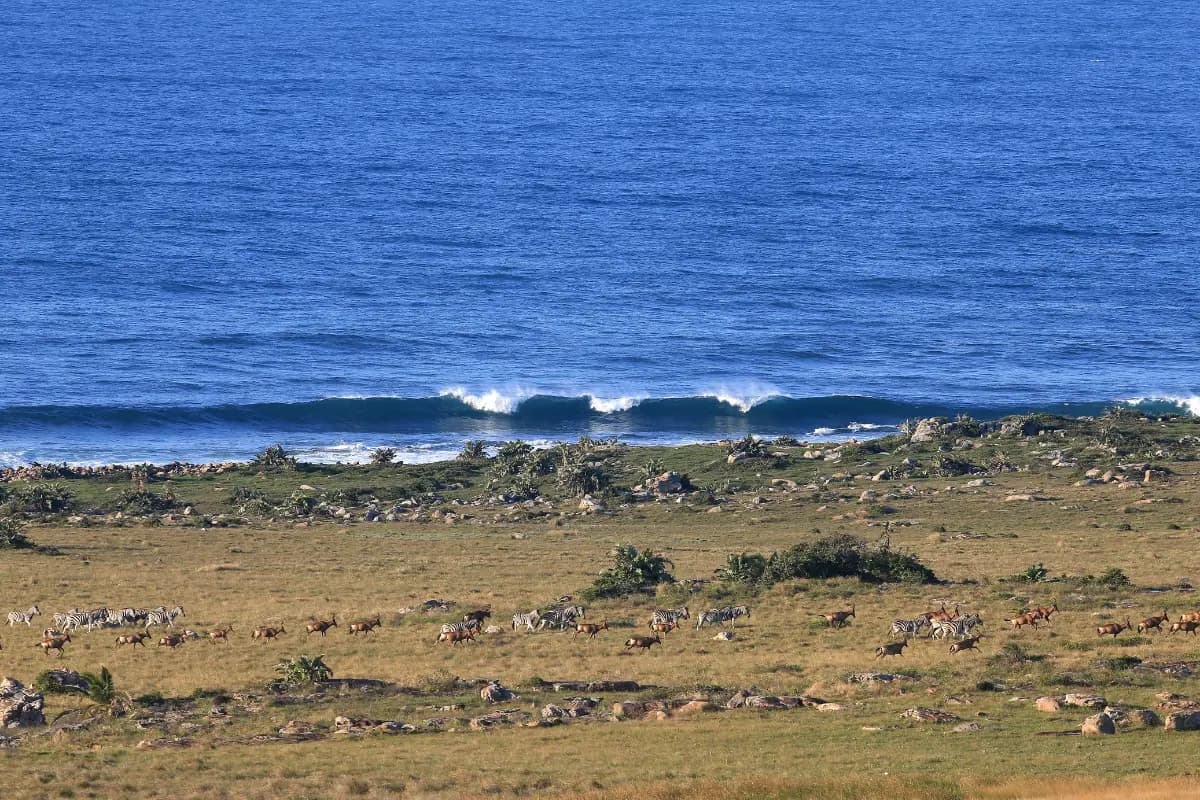
One of the first things you notice in Mkhambathi is the openness. Unlike many reserves dense with bush, here the grasslands stretch wide and golden, broken only by rocky ridges and the glint of sea in the distance.
That openness makes for incredible wildlife viewing. Herds of eland, South Africa's largest antelope, wander the plains with slow majesty. Red hartebeest, blesbok, and zebra move in smaller groups, their silhouettes sharp against the horizon. In the quieter corners, you might spot a grey rhebok or duiker darting into cover.
On the cliffs, chacma baboons bark and tumble about. At night, the cry of the black-backed jackal carries across the grassland.
Watching a herd of eland graze while waves crash just a few hundred metres away is a reminder that Mkhambathi is unlike anywhere else. For a full guide to the wildlife you're likely to encounter on the trail, see Wild Coast Wildlife near Mtentu.
A Sky Full of Wings
Tagged Cape vulture soaring with wings fully spread against clear blue sky above Wild Coast Eastern Cape
If you're a birder, Mkhambathi is a pilgrimage. Over 290 species have been recorded here, and you don't need to be an expert to be blown away.
The cliffs host one of South Africa's largest colonies of Cape vultures, with 400-800 birds wheeling in the thermals. Seeing them circle in the blue sky is both humbling and thrilling.
In the wetlands, grey crowned cranes strut with regal poise, while African grass owls and swamp nightjars call from the reeds at dusk. In the forests, flashes of green and red reveal the Knysna turaco, while strelitzia flowers attract Gurney's sugarbirds and greater double-collared sunbirds.
Even if you're not a birder, you'll find yourself pointing, craning your neck, and asking, "What's that one?"
Plants Found Nowhere Else
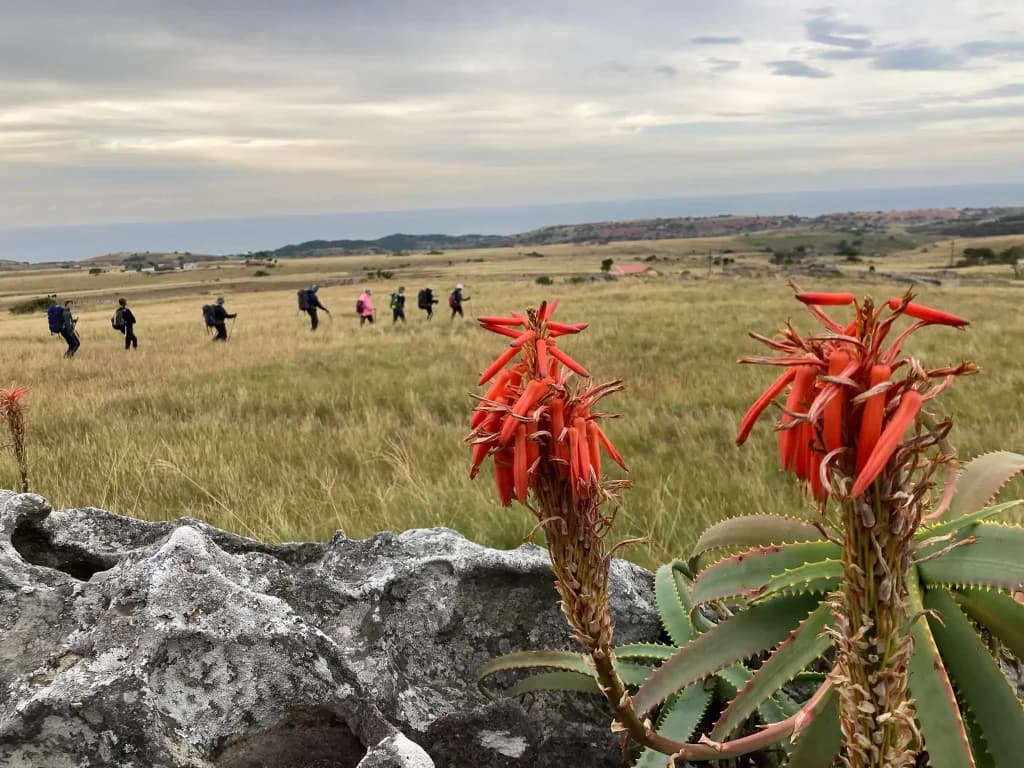
Red aloe flowers in the foreground as a group of hikers crosses open grassland at Mkambathi Nature Reserve, Wild Coast
Mkhambathi is part of the Pondoland Centre of Plant Endemism, which is located within the global Maputaland-Pondoland-Albany biodiversity hotspot. That's a mouthful, but what it means is simple: the plants here are unique, precious, and irreplaceable.
Nearly 2,200 plant species have been recorded in the reserve, with almost 200 found nowhere else on Earth. Some highlights:
- The Pondo palm is a rare species that grows only along the Msikaba and Mtentu rivers.
- The false water-berry (Rhynchocalyx lawsonioides), another endemic of Pondoland.
- Forest giants like the red milkwood provide shade along riverbanks.
The plant life isn't just background scenery. It shapes the birds, the insects, and even the feeling of the reserve. For a deeper look at the endemic species you're likely to encounter on the trail, see Indigenous Plants and Wildlife on the Wild Coast.
A Coastline of Stories and Shipwrecks
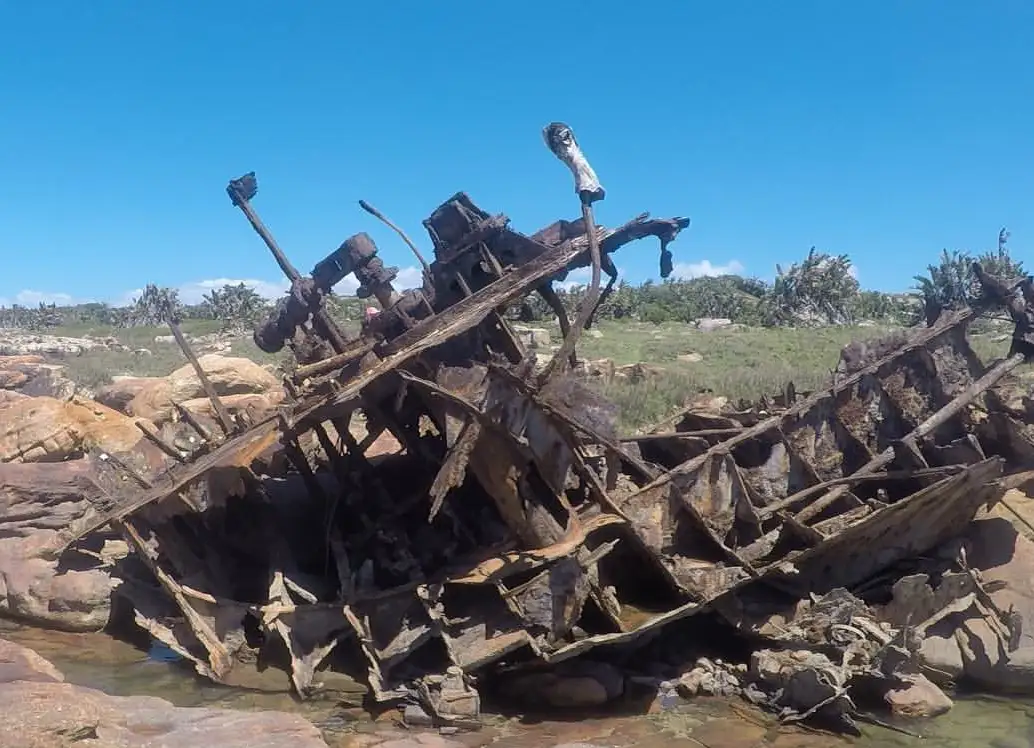
Rusted twisted hull of the Weolmi shipwreck collapsed on rocks at Mkambathi, Wild Coast, Eastern Cape
The Wild Coast has always tested those who ventured here. Mkhambathi's coastline carries tales of both natural beauty and human struggle.
Two shipwrecks in particular are part of its history:
- The São Bento (1554), a Portuguese shipwreck near the Msikaba River. Survivors walked hundreds of kilometres north, a story of endurance etched into local lore.
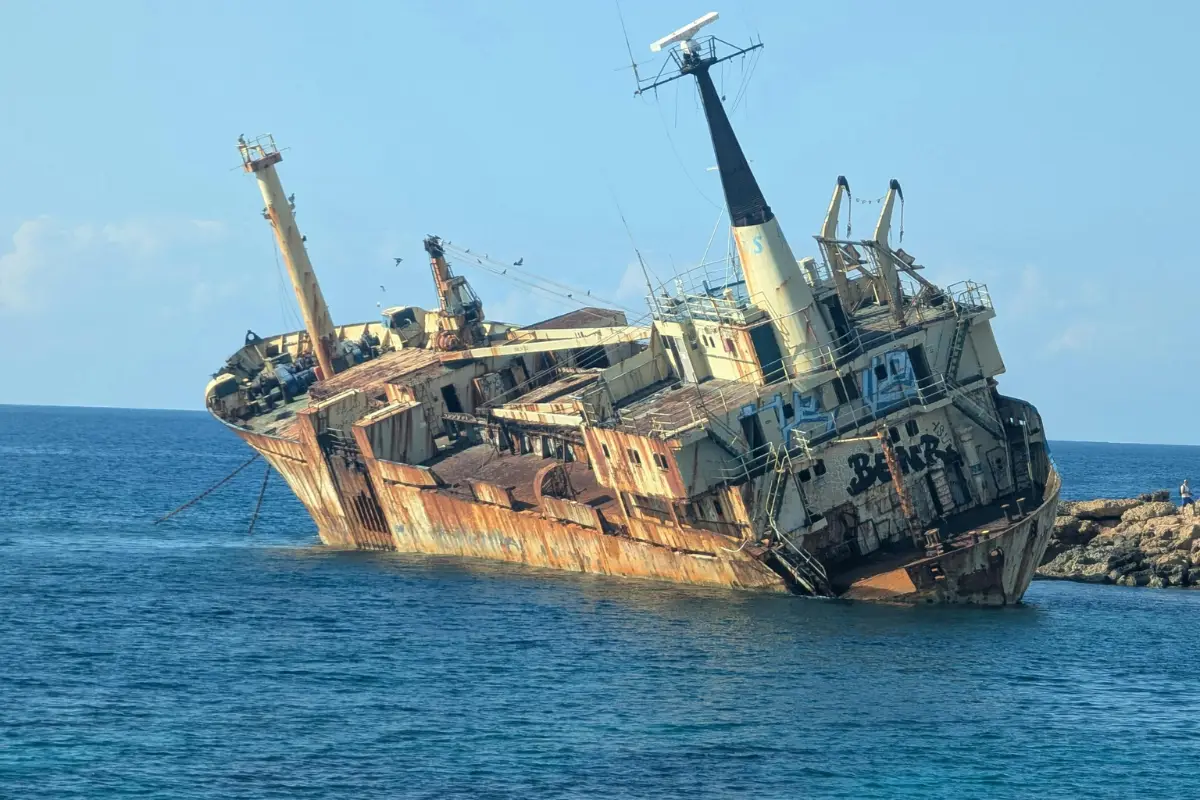
- The Weolmi is a fishing vessel. The crew apparently consumed too much alcohol and drove straight onto the rocks. Maybe this is where that saying comes from? "I will have my drink on the rocks?"
People and Land: A Story of Restitution
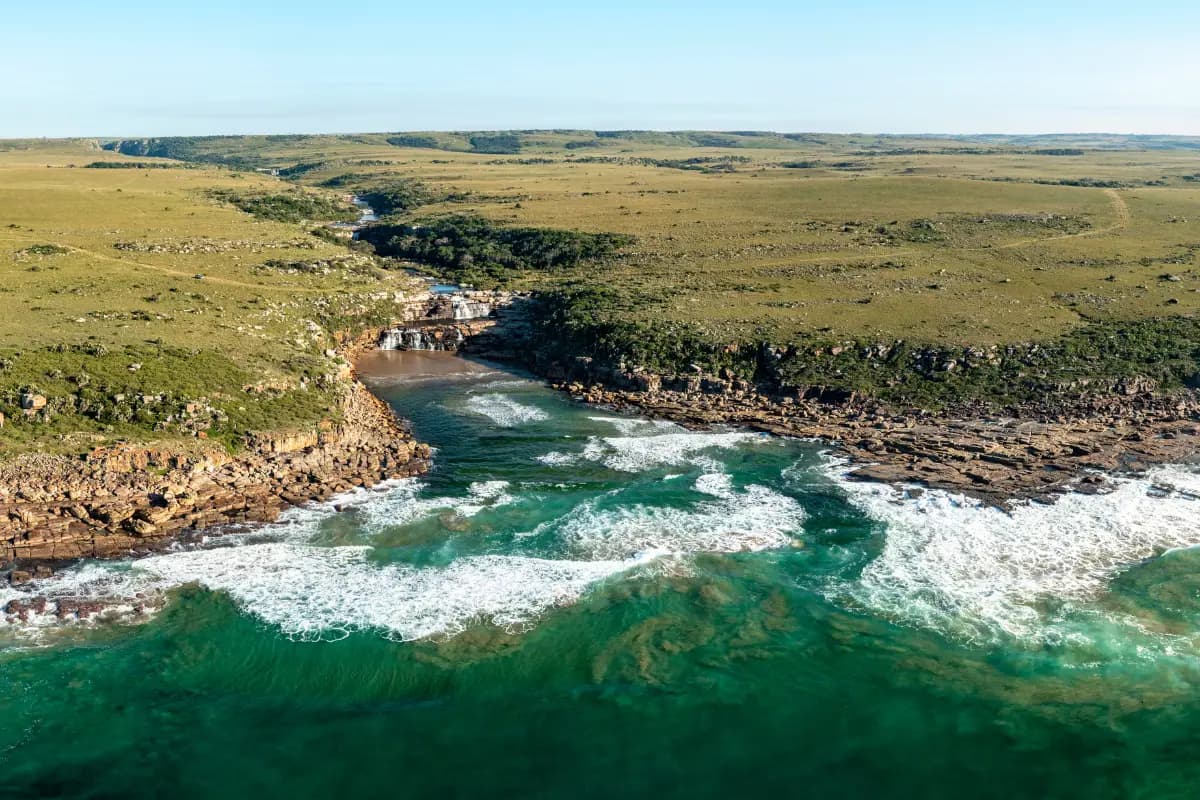
Aerial view of wild rocky coastline at Mkambathi Nature Reserve on South Africa's Wild Coast
Mkhambathi's story is not just ecological, it's social. For centuries, the land was used for colonial grazing, and later it was used to house a missionary hospital where all of the lepers were sent to. In 1977, it was declared a provincial reserve, but it was not returned to its rightful custodians, the amaPondo people, until 2004, under the Mkambathi Land Trust.
Beyond the Land: The Ocean Frontier
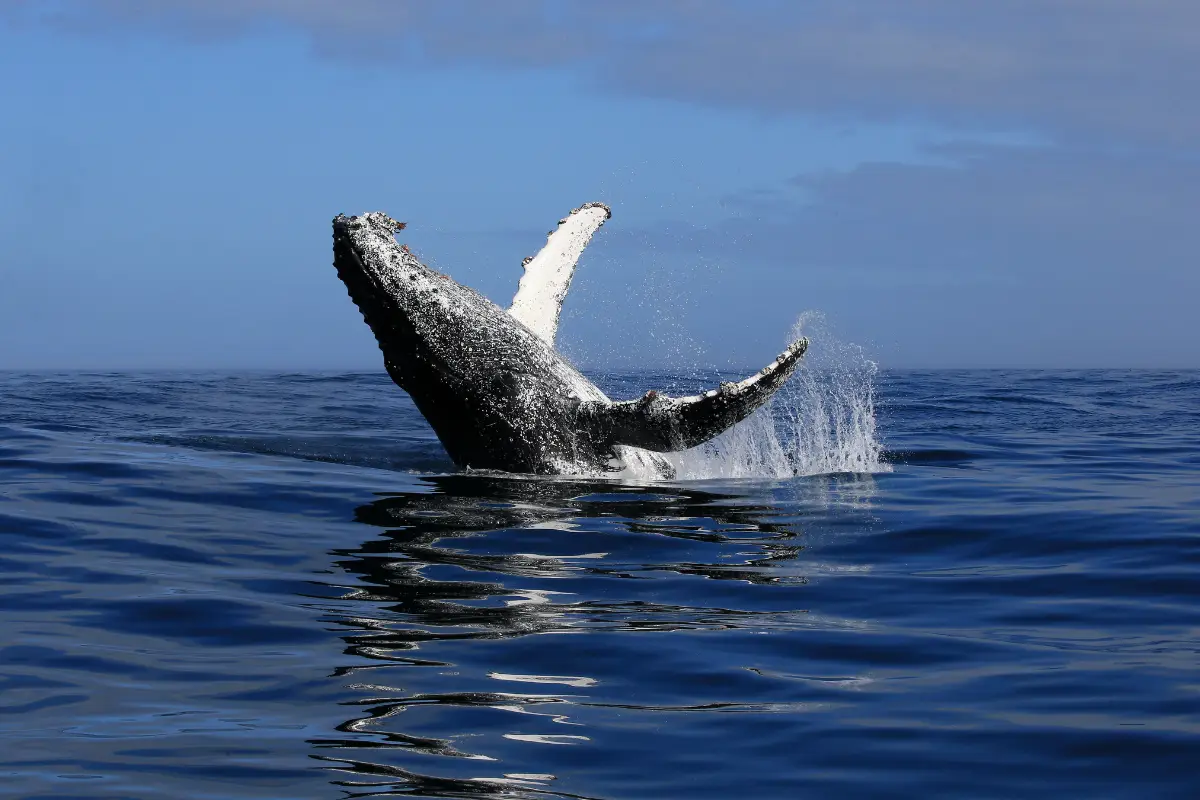
Humpback whale breaching from the Indian Ocean off the Wild Coast of South Africa near Mkambathi
Mkhambathi doesn't stop at the high tide line. Offshore lies the Pondoland Marine Protected Area, a stretch of reef and ocean that bursts with life.
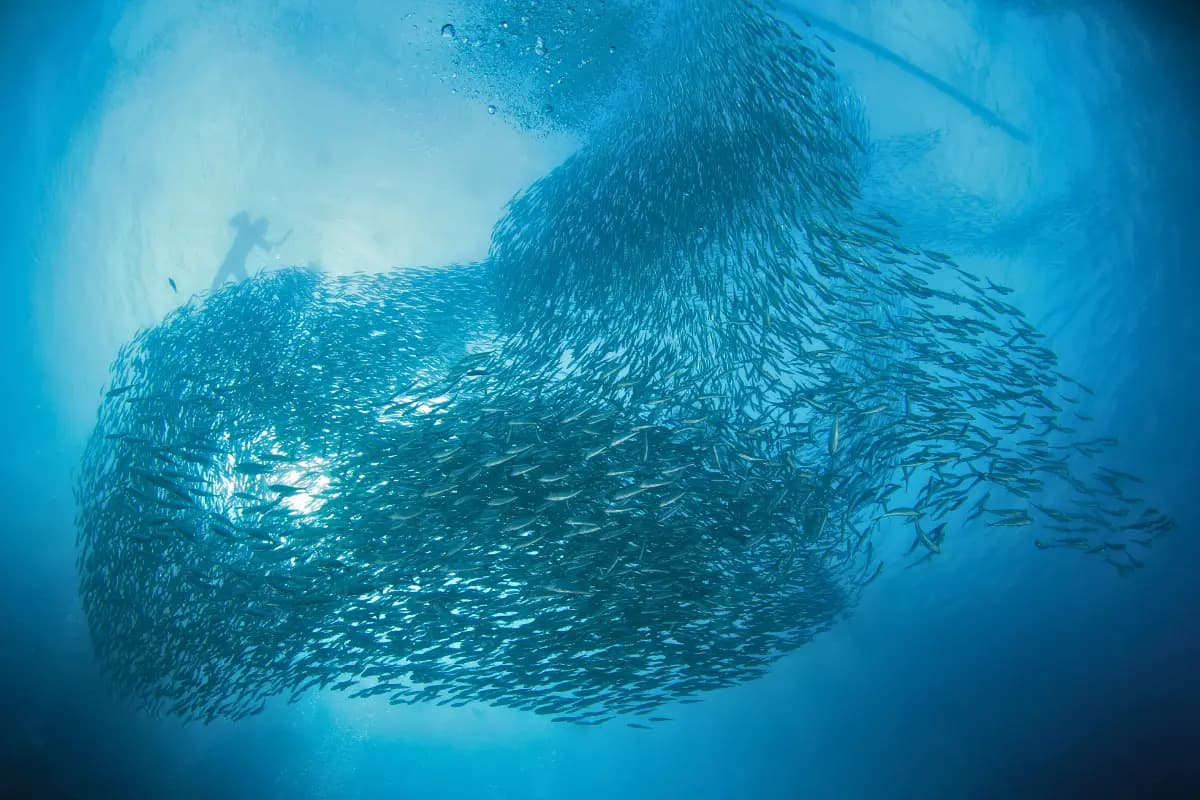
From the shoreline, you might spot humpback whales breaching on their migration, dolphins chasing shoals, or, in winter, the legendary Sardine Run, one of the world's greatest wildlife spectacles, when predators gather in a feeding frenzy along the coast.
If you’re planning a visit, don’t miss our full guide on Where to Stay at Mkambati: Lodges, Camps & Insider Secrets, it’s packed with honest insights on the best places to stay, how to get there, and the local experiences worth your time.
What Is There to Do in Mkhambathi?
Plenty. There's no shortage of ways to explore:
- Hike the rivers to waterfalls and swimming pools.
- Kayak or canoe through estuaries, or let us paddle you across from Mtentu.
- Birdwatching
- Game viewing
- Unwind with a massage at Gwe Gwe Beach Lodge, the perfect end to a wild day out.
- Swim in crystal-clear river pools.
- Fishing
- Picnic on the cliffs with ocean views stretching forever.
What Should You Know Before Visiting Mkhambathi?
- Size: 7,720 hectares.
- Climate: Mild sub-tropical, moderated by the Agulhas Current. Summers are warm and rainy (Sep-Feb), winters are drier with crisp blue skies.
- Best time to visit: Year-round. Summer for lush rivers and waterfalls, winter for hiking and whale watching.
- What to bring: Walking shoes, swim gear, binoculars, sunscreen, a picnic, and a sense of adventure.
Why Visit Mkhambathi With Mtentu Ramble?
Exploring Mkhambathi isn't always easy, unless you stay with us. From Mtentu Ramble, it's literally across the river.
We will:
- Kayak you across the Mtentu River: an adventure in itself.
- Arrange your reserve entry fee, as well as provide you with a guide so entry is smooth.
- Share our local knowledge: the best picnic spots, where to swim.
It's the simplest and most rewarding way to step into South Africa's most unique reserve.
Book Your Trip Today
From Mtentu Ramble, the Wild Coast's greatest treasure is just a paddle away.
FAQs
Why is Mkhambathi famous?
For its waterfalls that plunge into the sea, its rare plants, and its cultural significance to the amaPondo people.
Is it suitable for families?
Yes. There are trails of varying lengths and safe swimming pools.
How close is it to Mtentu Ramble?
It's directly across the river, a short paddle away. Mkambati & Strandlooper Falls are approximately 5 kilometers away. Horseshoe Falls is an extra 4 kilometers if you wish to see them.
Can I do a day trip?
Absolutely. Many guests spend the day hiking and swimming before kayaking back in the afternoon.
Keep Exploring the Wild Coast
If Mkambati has captured your heart, there’s more waiting just beyond the cliffs and rivers.
Explore more of our Wild Coast stories:
- Where to Stay at Mkambati: Lodges, Camps & Insider Secrets: our full guide to accommodation inside and around the reserve.
- Why We Fell in Love with GweGwe Beach Lodge: the oceanfront stay that defines barefoot luxury and community-driven conservation.
- Best Multi-Day Hiking Trails on the Wild Coast →: how the Mtentu Ramble compares to other routes through the Eastern Cape.
- Best Time to Hike the Wild Coast →: when to visit for whales, waterfalls, and dry river crossings.
Some links in this article are affiliate links. If you book through them, we may earn a small commission at no extra cost to you. This helps support the Mtentu Ramble.
Ready to Experience This Yourself?
The Wild Coast is waiting. Book your guided hike with Mtentu Ramble and create memories that will last a lifetime.