Where to Stay at Mkambati: Lodges, Camps & Insider Secrets
Planning a trip to Mkambati Nature Reserve? Compare lodges, camps, and insider tips, including GweGwe Beach Lodge, for your Wild Coast stay.
 Allan Hein10 October 2025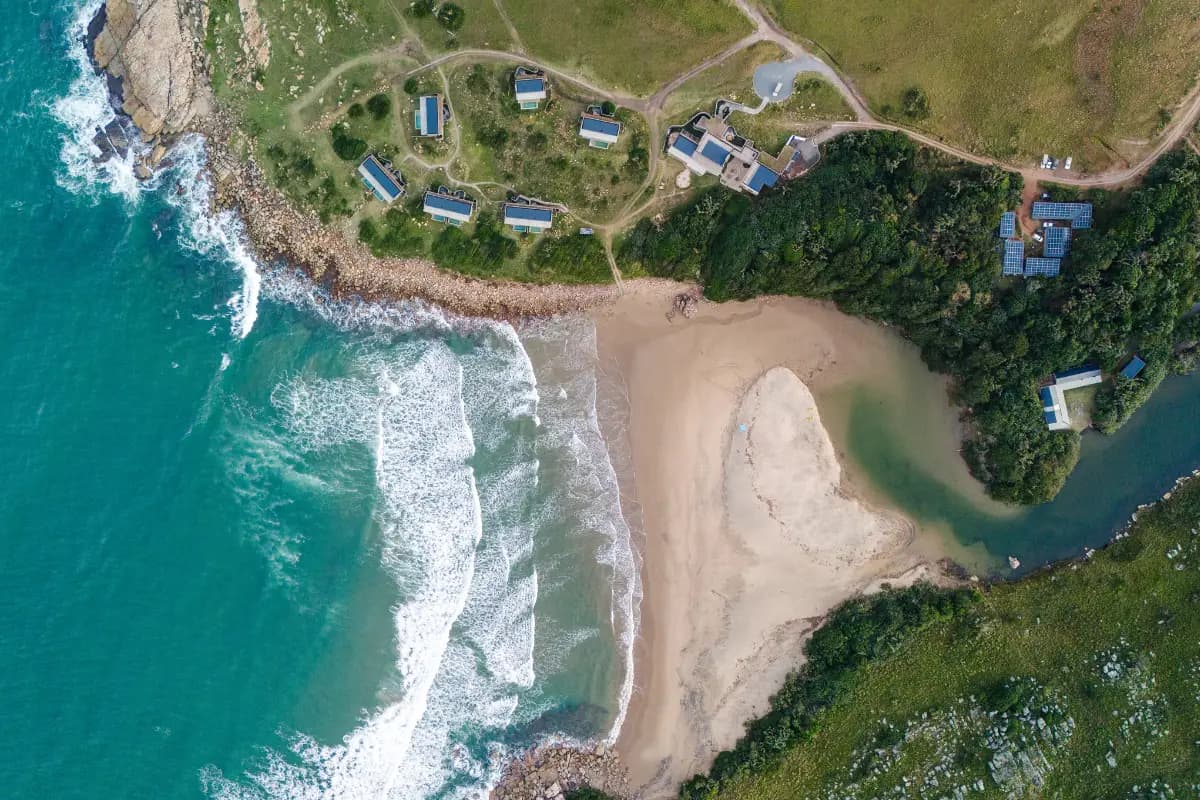
If you've ever pictured South Africa's Wild Coast, cliffs that crumble into turquoise water, rivers carving paths through untouched grassland, then you've already dreamt of Mkambati.
This nature reserve is one of those rare corners of the world where silence still has texture. You drive for hours; the tar gives way to red dust, and suddenly the landscape opens wide: an endless sky, wind off the Indian Ocean, and herds of zebra intermingled with eland grazing beside the surf.
So, where do you stay when you get here?
That's where the magic begins.
Table of Contents
GweGwe Beach Lodge
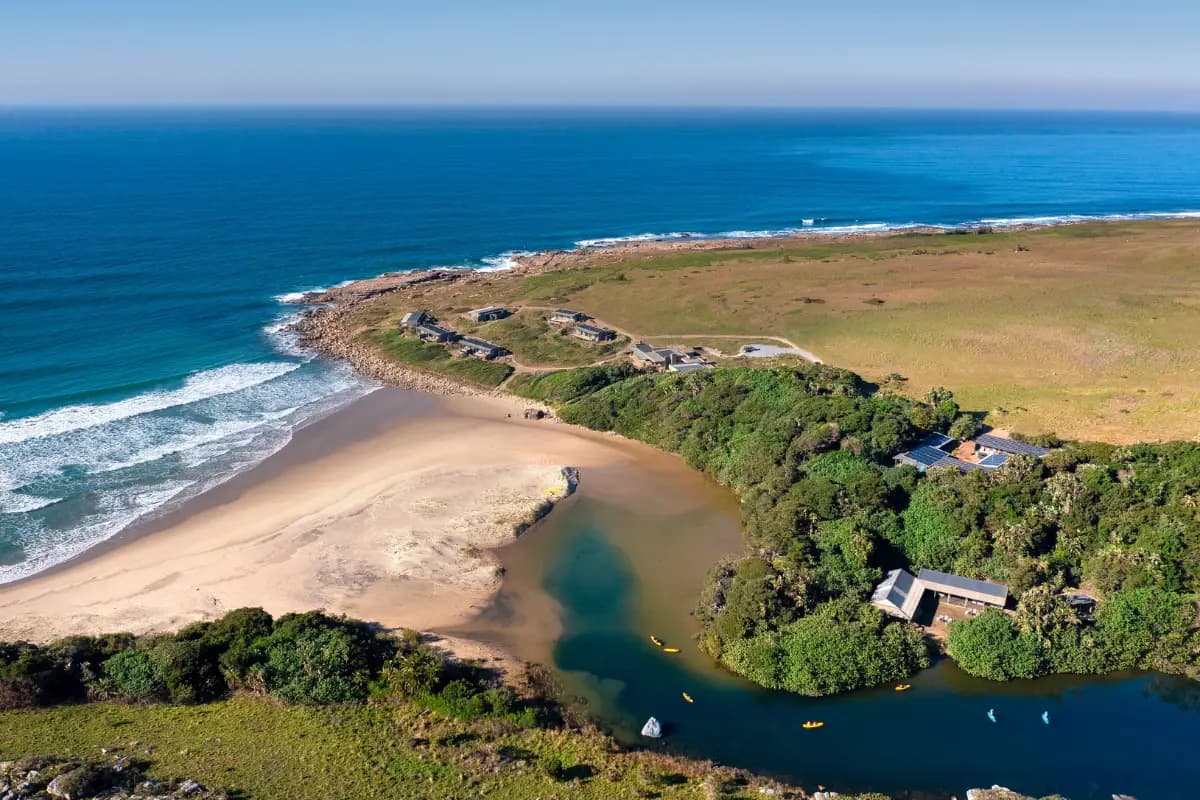
Aerial view of Gwegwe Beach Lodge nestled between the estuary and the Wild Coast shoreline in Mkambathi Nature Reserve
For most travellers, GweGwe is the Wild Coast's holy grail, a lodge folded right into the reserve, perched above a sea so blue it looks lit from beneath.
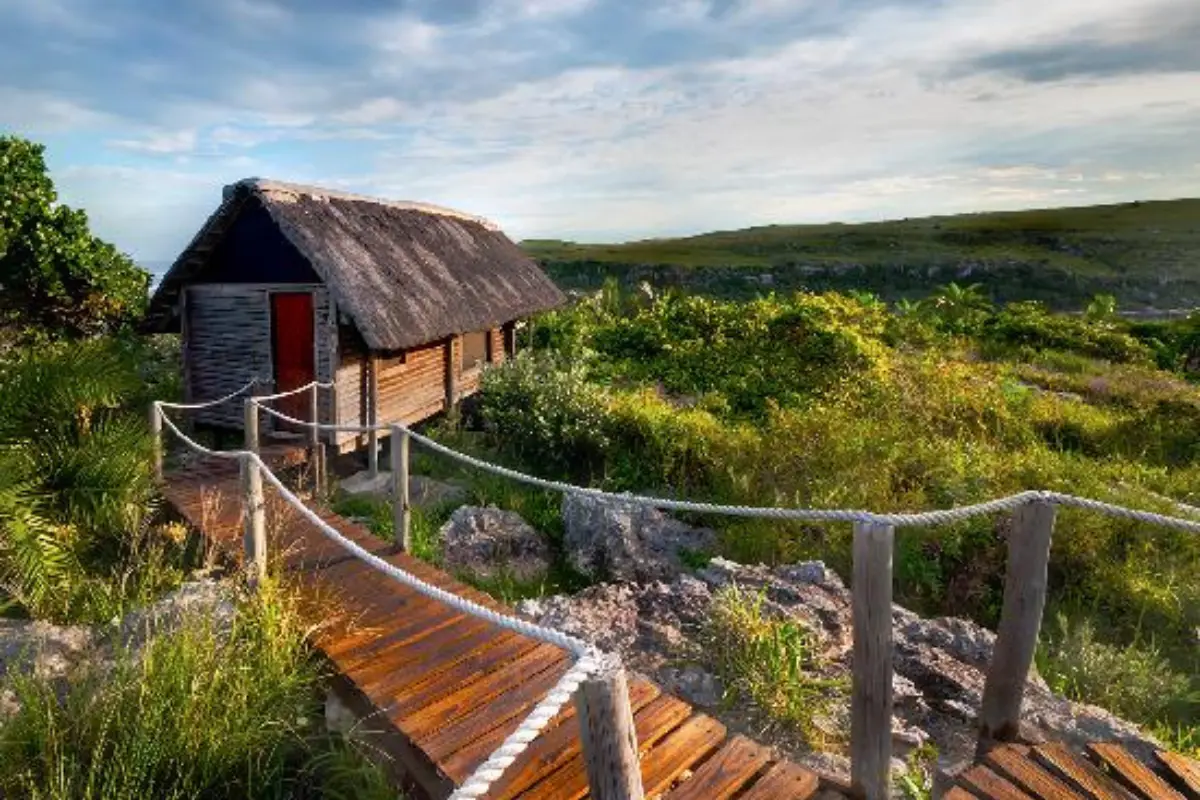
Each suite opens to a private deck where mornings start with the hiss of waves and a pot of strong coffee. Inside, it's barefoot luxury done right, smooth wood, wide windows, nothing unnecessary. Just you, the sea, and the sound of Eland's hooves as they click together, moving through the grass.
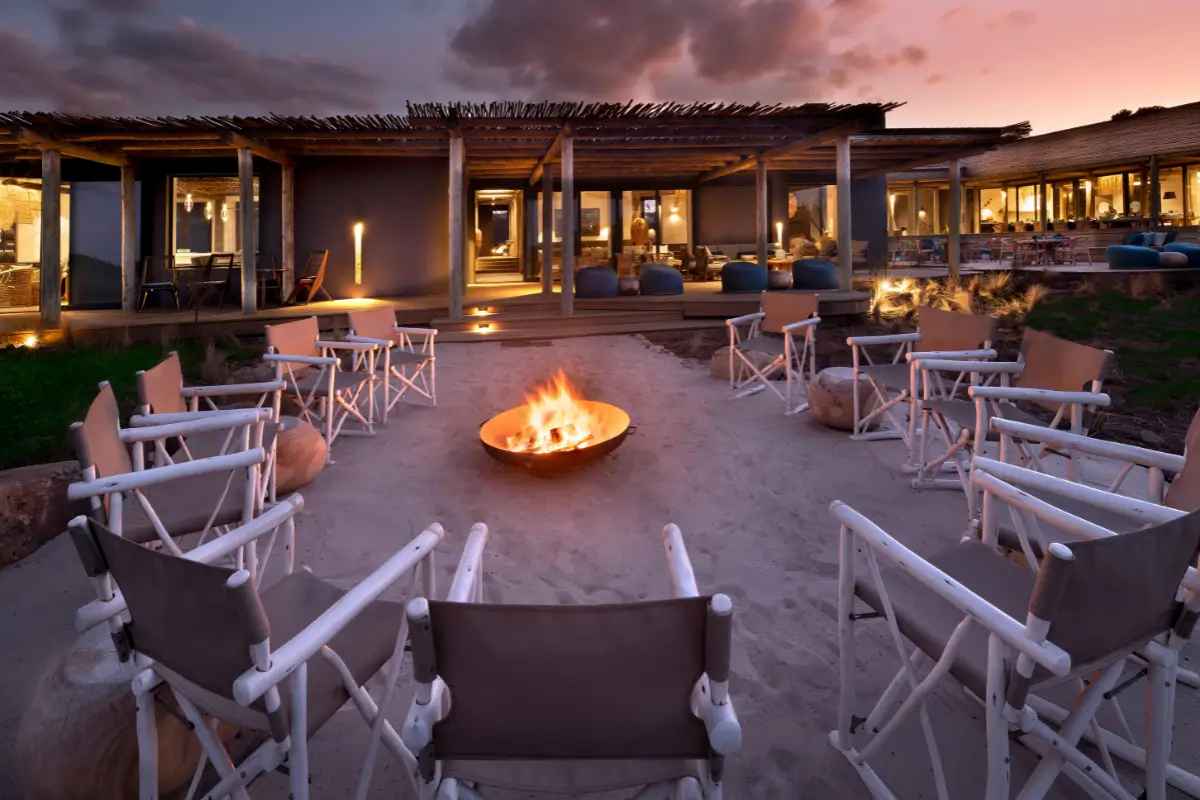
Evening fire pit and seating area at Gwegwe Beach Lodge on the Wild Coast, Mkambathi Nature Reserve, at sunset
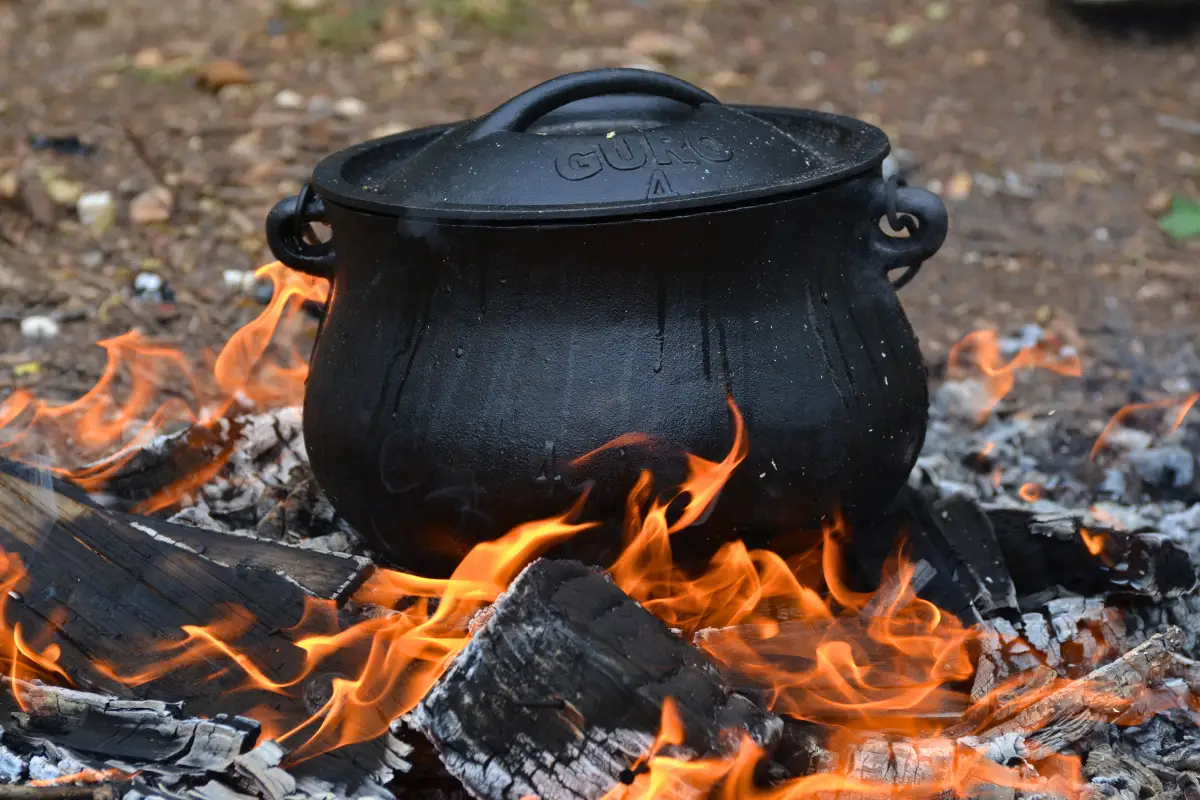
Meals and local drinks here are included and surprisingly refined, think freshly caught fish, local herbs, and a glass of chilled white wine under the stars. Guided walks lead you to the waterfalls that make this coastline famous, but most days you'll find yourself sitting still, watching dolphins trace the surf line.
We loved it so much we wrote an entire post about it, read our full guide on Why We Fell in Love with GweGwe Beach Lodge.
Good to know:
With no phone signal and only a whisper of Wi-Fi, Gwe Gwe invites you to truly unplug, to trade notifications for the sound of waves and the calls of coastal birds.
Other Lodges & Camps Nearby
If GweGwe is fully booked or out of reach, don't worry, the surrounding coast is dotted with small, character-filled stays that keep you close to Mkambati's rhythm.
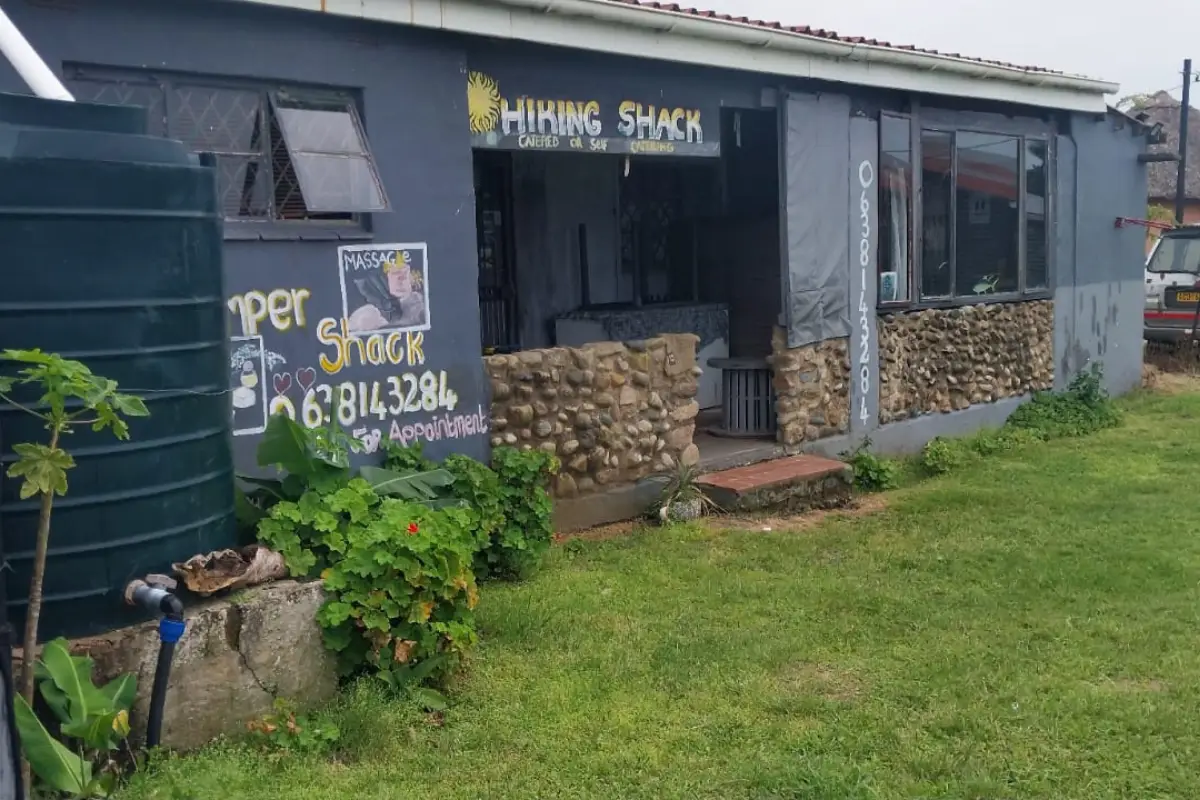
The Hiking Shack, just north of the reserve, is the kind of place you come for simplicity. Expect a solid brick dormitory that sleeps ten, with the basics covered, beds, shared kitchen space, and a view that stretches toward the sea. It's the kind of stay made for hikers and small groups who want to be close to the trails, cook together, and fall asleep to the sound of the ocean just beyond the grasslands.
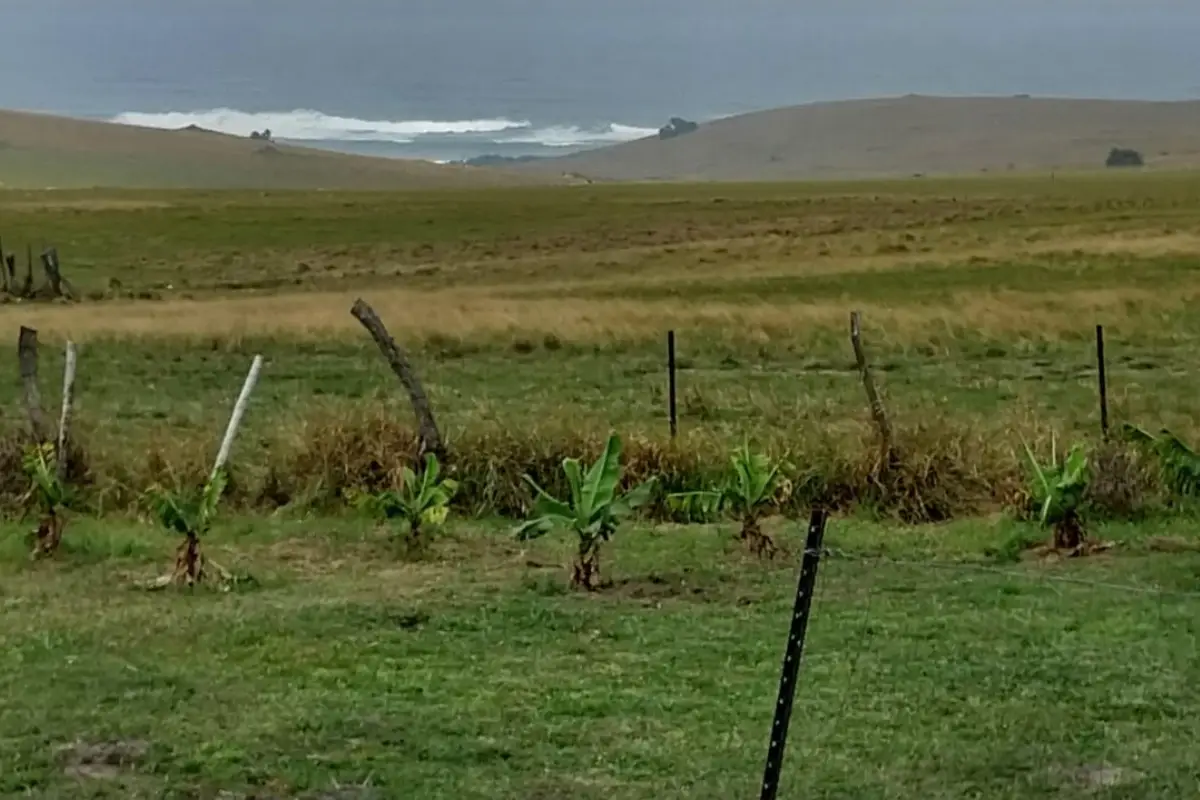
Sweeping Wild Coast grassland plateau with distant ocean under overcast skies near the Hiking Shack
Mtentu Lodge suffered fire damage in December 2023 and is currently being rebuilt. Updates will be announced once it's ready to reopen.
Further inland, a handful of community-run homestays near Mnyameni Falls welcome travellers looking for something deeply local. These stays are basic, bucket showers, home-cooked pap and curry, but the warmth is genuine and your money stays in the village.
And then there are the self-catering chalets inside Mkambati Reserve, managed by Eastern Cape Parks. Simple, sturdy, and right on the trails. Bring your own supplies and you'll have a front-row seat to one of the most unspoiled coastlines in South Africa.
Getting There
Mkambati lies halfway between Port Edward and Port St Johns on South Africa's northern Wild Coast, remote enough to stay wild, but reachable with a bit of planning.
By Road:
- From Durban: about 5 hours (350 km). Follow the N2 south past Port Edward, then Bizana, and head toward Flagstaff. Just before Flagstaff, take the road to Holy Cross, where you will see another sign to take you to Mkambati. The final stretch is gravel; a 4×4 vehicle is best.
- From Mthatha: around 4 hours north on the R61 via just before Flagstaff. and follow the above.
- Closest airports: Margate Airport. Durban's King Shaka, East London, all with car hire options.
By Air
For those short on time (or traveling to the reserve's upmarket lodges), small private planes and helicopter charter flights can land at the Mkambati airstrip.
By Sea
A few adventurous guests and lodge teams also use rubber ducks (inflatable motorboats) to access Mkambati via nearby river mouths or sheltered coves, weather permitting. It's not common, but it's one of the most unforgettable ways to arrive, especially along this rugged stretch of coast.
Always check local road and weather conditions before you travel; heavy rains can make dirt roads tricky, and coastal routes depend on tides and swell.
Best Time to Visit Mkambati
You can visit year-round, but each season tells a different story.
- April to October: Cooler, drier months, ideal for hiking, clear skies, and long days out on the plains.
- November to March: Lush and alive, when afternoon storms roll in and everything hums with colour.
- June to July: Sardine Run season, millions of fish pull in dolphins, sharks, and gannets in one wild spectacle.
- September to October: Wildflowers and newborn antelope; the reserve is at its most photogenic.
Things to Do in Mkambati
1. Hike to the Waterfalls
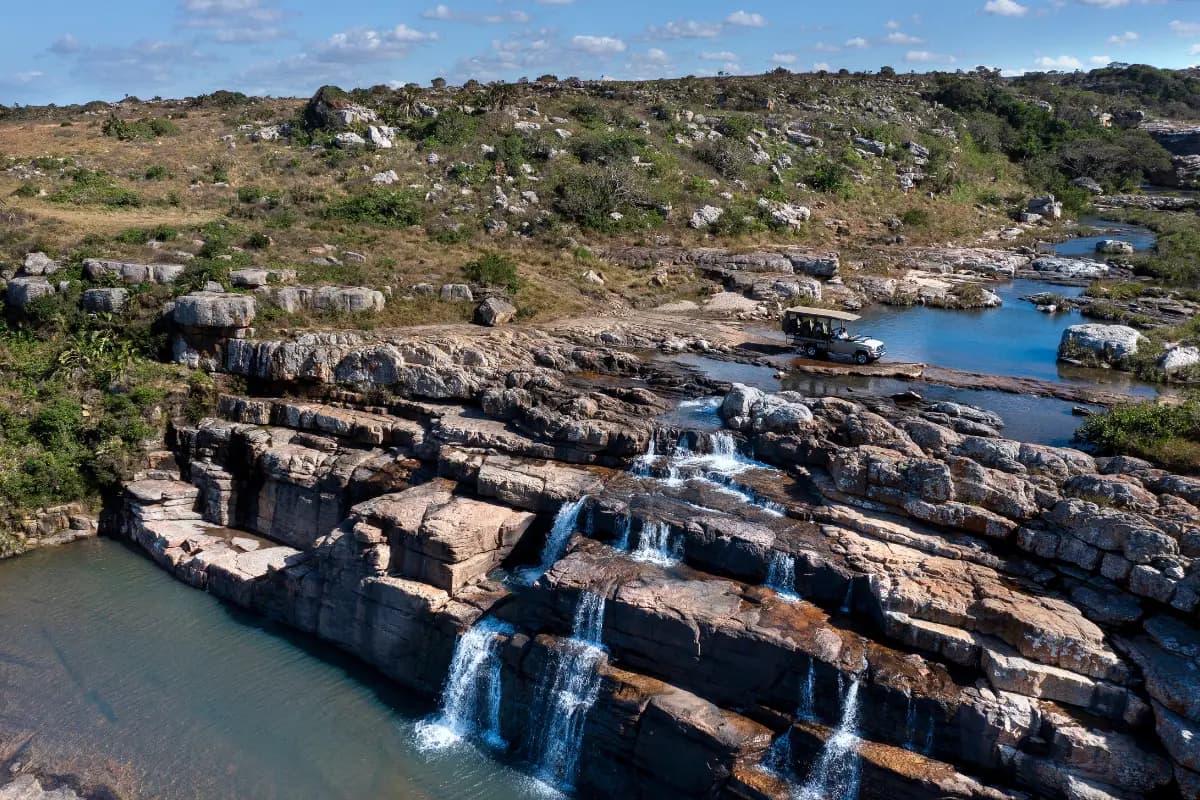
Aerial drone view of Horseshoe Falls cascading over sandstone rock shelves in Mkambathi Nature Reserve, Wild Coast
Few places on Earth have rivers that tumble straight into the ocean. Horseshoe and Strandloper Falls are the icons, both reached by gentle hikes that weave through grassland alive with zebra and wildebeest.
2. Kayak the Estuaries
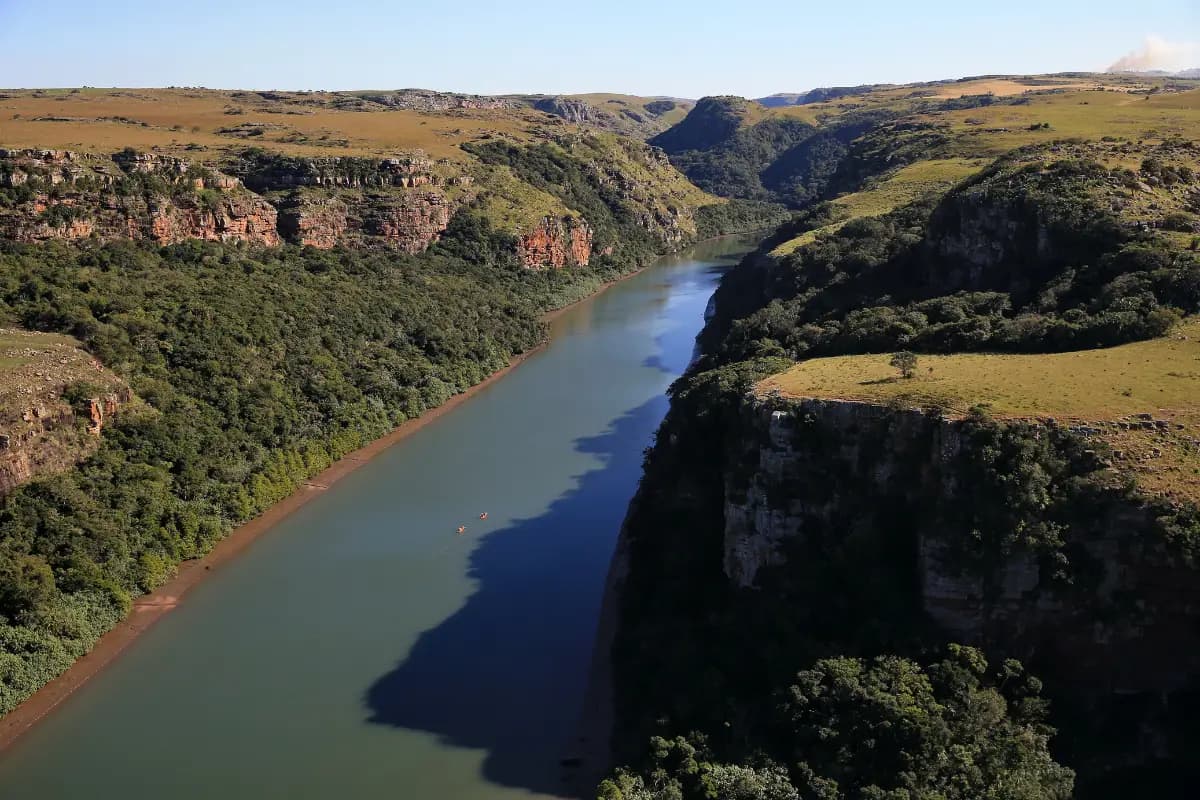
Aerial view of the Mtentu River winding through a steep forested gorge in Mkambathi Nature Reserve, Eastern Cape
The Mkambati and Mtentu rivers are calm, clear, and rich with life. Paddle quietly and you'll spot fish eagles circling above and mangrove kingfishers darting low across the water.
3. Swim in Rock Pools
These pools are nature's own spa baths, cold, perfect, and scattered along the rivers like secrets waiting to be found.
4. Game Viewing & Birdwatching
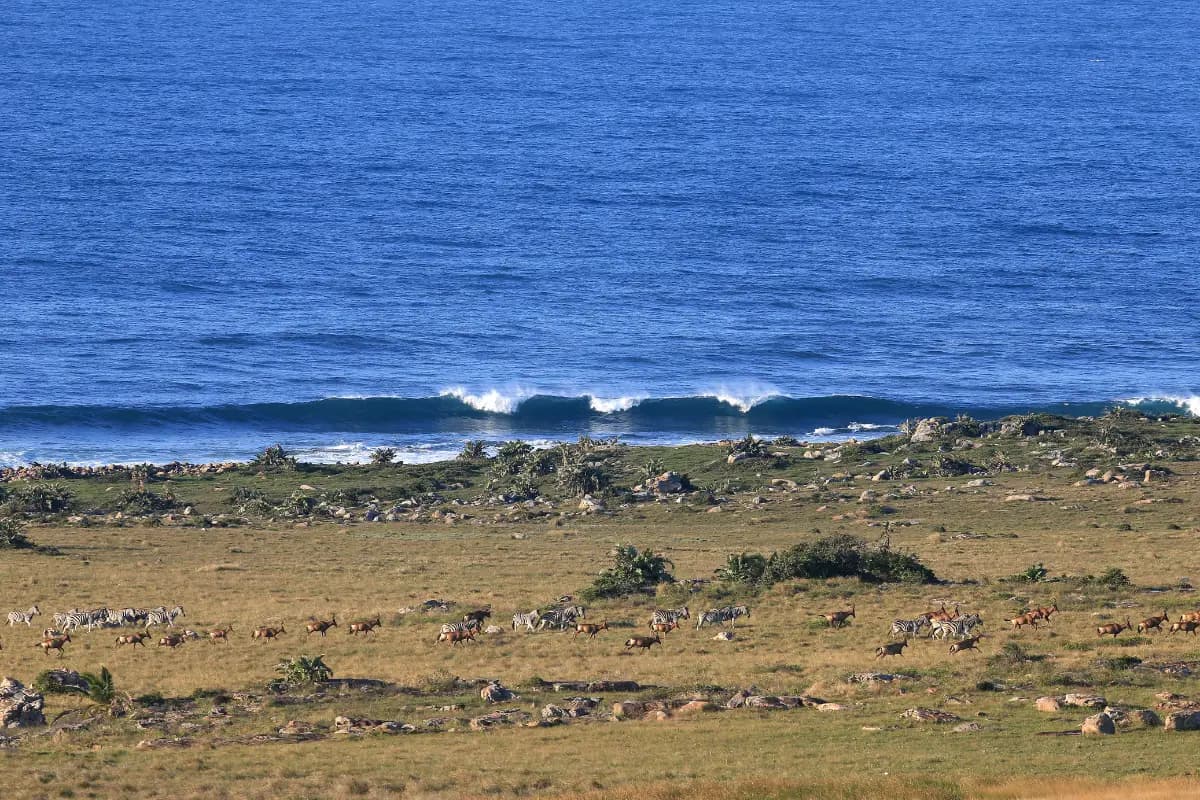
Herd of zebras grazing on coastal grasslands at Mkambathi Nature Reserve with Indian Ocean beyond
Expect herds of eland, blesbok, and wildebeest grazing right up to the cliffs. Birders, bring your binoculars: crowned cranes, Knysna turacos, and secretary birds all call this home.
5. Picnic on the Cliffs
Pack lunch and head for one of the plateaus overlooking the sea. You'll sit in silence for a while; it's that kind of view.
6. Bike Ride
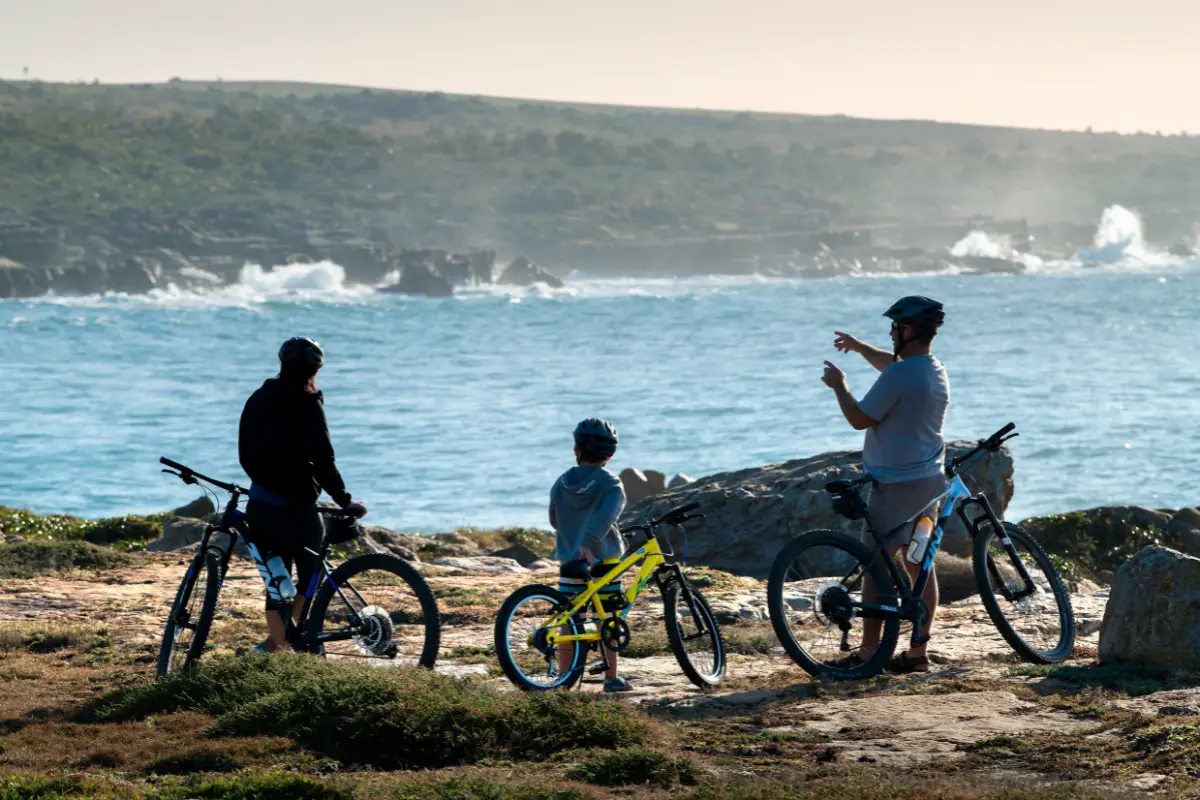
Family with mountain bikes silhouetted against crashing waves on the rocky Wild Coast shore at Mkambathi Nature Reserve
Exploring Mkambati by mountain bike is pure freedom, open trails, ocean views, and the wind in your face as zebras watch you roll by.
7. End the Day at GweGwe's Spa
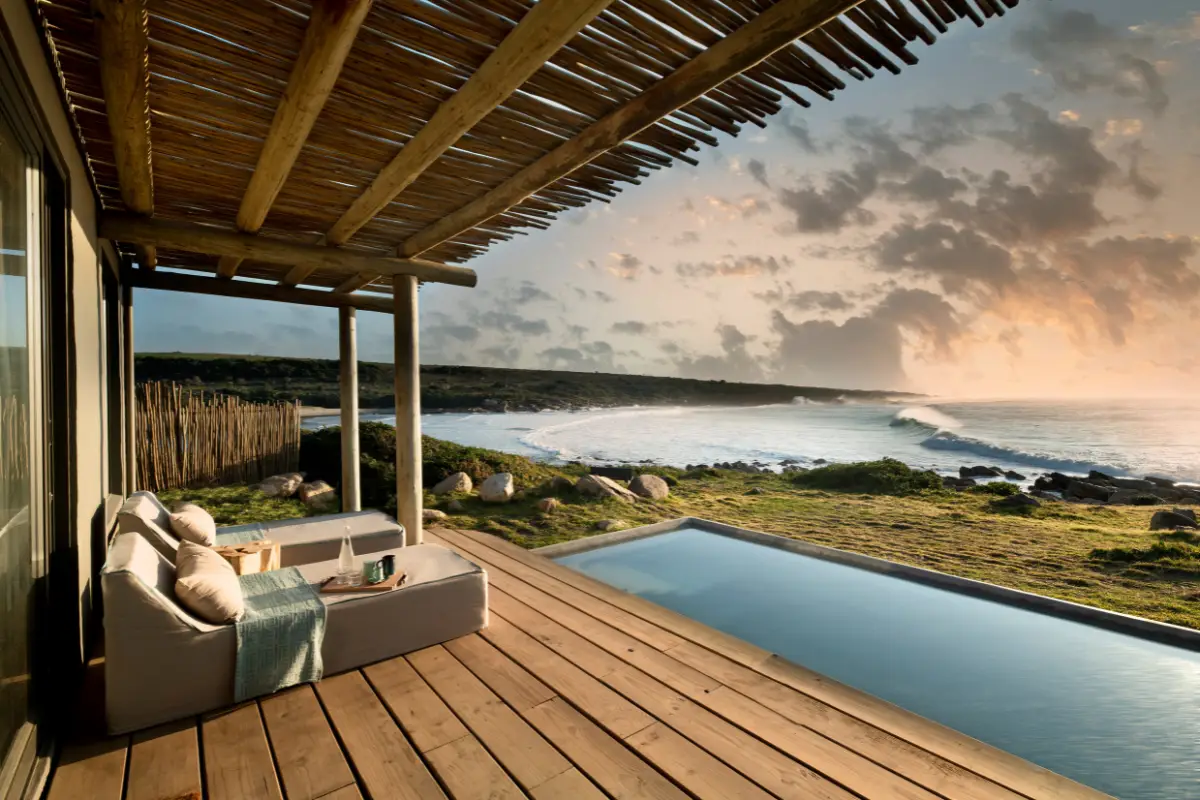
Infinity plunge pool and lounge chairs on a wooden deck at GweGwe Beach Lodge overlooking the Wild Coast at dusk
Book a massage, listen to the surf through open walls, and let the Wild Coast unwind whatever the city left in you.
Insider Tips
- Stock up on food and fuel before you leave the main towns; once you're in, options are limited.
- Pack light layers; mornings can be cool and afternoons steamy.
- Download maps ahead of time, signal is patchy.
- Learn a few isiXhosa greetings; locals appreciate the effort.
- Stay at least two nights. It takes that long to slow down enough to feel the place.
Why Mkambati Is Worth the Journey
Mkambati isn't just a destination, it's a threshold between worlds. The drive in strips away noise and hurry until what's left feels timeless.
Here, rivers leap off cliffs, zebras graze beside the sea, and the night sky humbles you into silence.
If you've ever wanted to feel the Wild Coast, not just see it, this is where you begin.
FAQs
Where can you stay in Mkambati?
Options range from GweGwe Beach Lodge, the reserve's flagship barefoot-luxury lodge, to the Hiking Shack dormitory just north, community-run homestays near Mnyameni Falls, and self-catering chalets inside the reserve managed by Eastern Cape Parks.
How do you get to Mkambati?
Mkambati lies about five hours (350 km) from Durban and around four hours from Mthatha. The final stretch is gravel, so a 4×4 is best. For those short on time, small planes and helicopters can also land at the Mkambati airstrip. Always check road and weather conditions before you travel.
When is the best time to visit Mkambati?
You can visit year-round. April to October brings cooler, drier days ideal for hiking, while November to March is lush and green with afternoon storms. June and July are Sardine Run season, and September to October brings wildflowers and newborn antelope.
Photo Credits:
All images supplied courtesy of the management of GweGwe Beach Lodge. All rights reserved.
Keep Exploring the Wild Coast
Dive deeper into our other Wild Coast stories:
- Mkambathi Nature Reserve: discover the landscapes, wildlife, and waterfalls that make this reserve one of South Africa's greatest hidden treasures.
- Why We Fell in Love with GweGwe Beach Lodge: the oceanfront stay that defines barefoot luxury and community-driven conservation.
Some links in this article are affiliate links. If you book through them, we may earn a small commission at no extra cost to you. This helps support the Mtentu Ramble.
Ready to Experience This Yourself?
The Wild Coast is waiting. Book your guided hike with Mtentu Ramble and create memories that will last a lifetime.