The Red Sand Dunes of the Wild Coast: Mtentu's Ancient Iron-Red Landscape
Walk the iron-red dunes between the Mtentu and Mzamba rivers, where 500,000-year-old stone tools lie scattered in the sand. A Wild Coast experience unlike any other.
 Allan Hein11 August 2025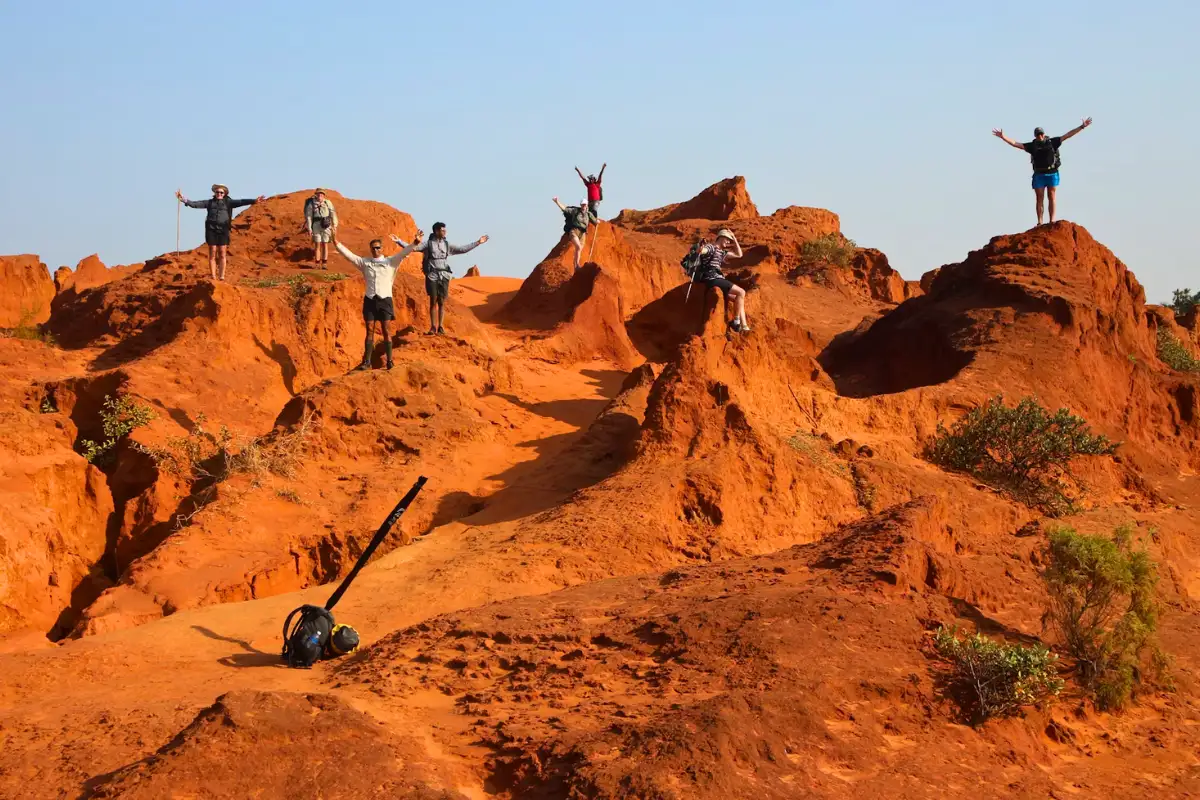
The Red Sand Dunes roll between the Mtentu and Mzamba rivers, stained a deep ochre by iron-rich sands, with the Indian Ocean stretching endlessly at their feet. It's a view that takes your breath away, but what lies beneath the surface is even more extraordinary. According to the legend of the Xolobeni Red Sands, the unique red dunes were formed by the hooves of more than 30,000 cattle that congregated in the area during the 1820s. This local tale underscores the cultural and environmental importance of the Xolobeni region along South Africa's Wild Coast, renowned for its natural beauty, rich indigenous culture, and valuable mineral sands that have sparked contentious mining proposals.
Here, scattered across the sand, lie stone tools from the Acheulean and Sangoan periods. These artefacts, dating back as far as 500,000 to 600,000 years, represent some of the earliest human technologies. Hand axes, scrapers, and blades sit half-buried in the dunes, reminders that our ancestors once lived, worked, and thrived right here on the Wild Coast.
Table of Contents
A Rare Open-Air Archive
Unlike most archaeological sites, the Xolobeni Red Dunes are not sealed away in caves or behind glass. They're open to the air, the sky, and anyone who walks carefully through the sand.
- The Acheulean Complex (dating back to approximately 600,000 years ago) is characterised by its large hand axes and cleavers.
- The Sangoan Industry (~300,000 years ago) introduced more refined tools, often linked to woodland and riverine environments.
To see tools from both industries lying on the surface, in one place, is extraordinary.
Archaeologists Kathy Kuman (2006) and Len van Schalkwyk (2007) wrote brief reports noting the richness of the site. Yet, despite its global importance, the dunes remain largely unstudied.
The Mining Debate
The Red Dunes aren't just rich in history. They're also rich in heavy minerals, including ilmenite, rutile, and zircon, which are used in a wide range of products, from paint to electronics. In 2008, an Australian company applied for mining rights along a 22 km stretch of this coastline.
That application ignited one of the most significant heritage vs. development battles in South Africa. The Amadiba Crisis Committee (ACC), representing local Mpondo communities, opposed the project. They argued that mining would destroy sacred lands, erase cultural memory, and shatter local ecotourism livelihoods.
In 2016, a temporary 18-month moratorium was placed on mining, but the dunes remain at risk. Without thorough study and official protection, the site could vanish forever.
The Mpondo Connection
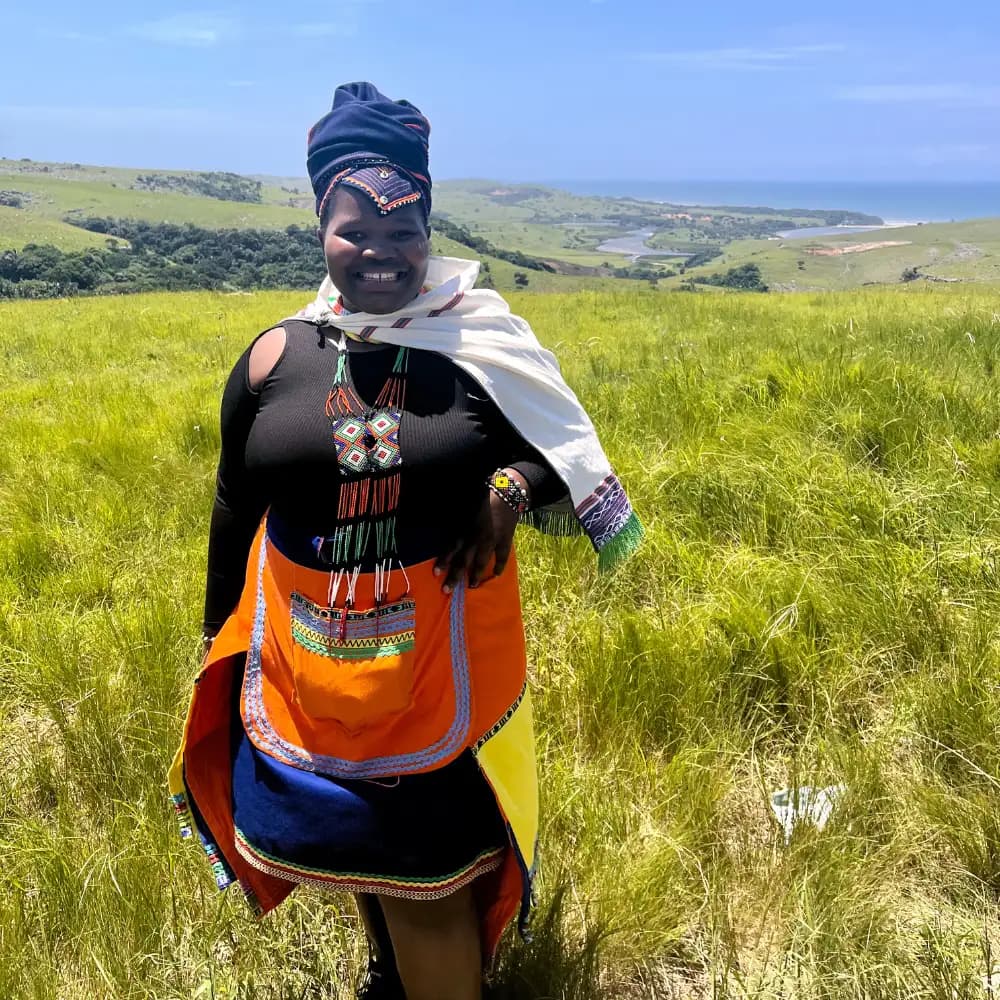
Mpondo woman in vibrant traditional beaded dress standing in coastal grasslands above the Wild Coast, Eastern Cape
For the Mpondo people of Xolobeni, the dunes are not an abstract heritage site. They are ancestral land. The amaPondo have lived along this stretch of coastline for centuries, and their connection to the red earth runs deep, woven into oral history, ceremony, and daily life.
It was the Mpondo communities who led the fight against mining, not from boardrooms, but from their homesteads. Their resistance wasn't just environmental activism; it was a defence of identity. When you walk these dunes, you walk on land that people have fought to protect with everything they have.
Visiting the dunes is a privilege that comes with responsibility. Always tread lightly, always seek local guidance, and always remember: this isn't just a natural wonder, it's living heritage.
Why Visit the Red Dunes?
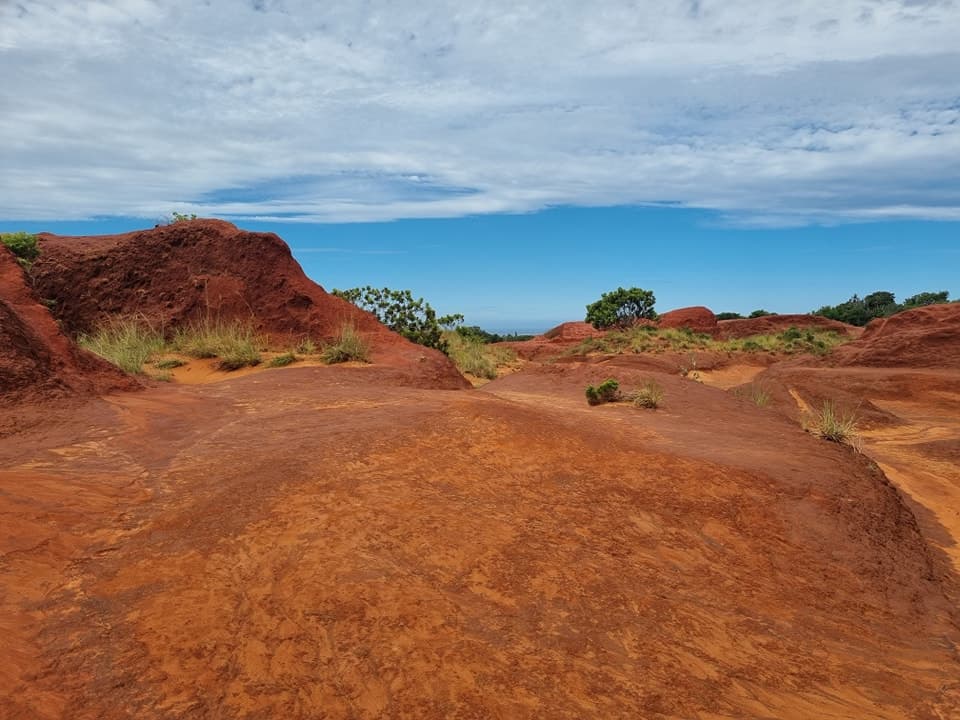
Iron-red sand dunes of Mtentu glowing under blue sky on the Wild Coast, Pondoland Eastern Cape
- Deep time made visible: Where else can you casually pick up a stone tool crafted half a million years ago?
- Untouched beauty: Vast dunes glowing red against the turquoise ocean.
- Cultural depth: A landscape deeply intertwined with the history and resistance of the Mpondo people.
- Ecotourism over extraction: Your visit supports a future where heritage and livelihoods are valued more than minerals.
Walking the Red Dunes With Mtentu Ramble
The Red Dunes are part of Day 1 of the Mtentu Ramble hike. After crossing the Mzamba Pedestrian Bridge, the trail winds through the dunes on the way to your cultural homestay in the Mnyameni region.
It's one of the most unforgettable stretches of the entire four-day walk: the ochre sand glowing beneath your boots, the ocean crashing in the distance, and the knowledge that you're treading on ground where humans have walked for half a million years.
Along the same stretch of coastline, you'll also pass near the Mzamba Fossils and Petrified Forest, another window into deep time that pairs perfectly with the story of the dunes.
Book Your Stay With Us
The Red Sand Dunes of Mtentu aren't the only thing to see at Mtentu. Waterfalls, river kayaking, and beaches that stretch for miles await.
FAQs About the Red Dunes of Mtentu
How old are the dunes?
The tools found here date back 300,000-600,000 years, from the Acheulean and Sangoan periods.
Are the dunes open to the public?
Yes, but always respect community wishes and travel with local guidance.
Why haven't they been fully studied?
Political tensions over mining rights and community resistance to outside exploitation have limited formal research.
Is mining still a risk?
Yes. Despite a moratorium, mining companies remain interested in the dunes' heavy minerals.
Keep Exploring the Wild Coast
If the Red Dunes have captured your imagination, there's more ancient history and wild beauty waiting:
- The Mzamba Fossils and Petrified Forest: 80-million-year-old fossils just down the coast.
- The Homestay: spend the night in a traditional Mpondo homestead after walking the dunes.
- Waterfalls Along the Mtentu River: from Suicide Rock to Swallowtail Falls, the river is full of surprises.
- Mkhambathi Nature Reserve: 7,720 hectares of grasslands, wildlife, and waterfalls that crash into the sea.
Ready to Experience This Yourself?
The Wild Coast is waiting. Book your guided hike with Mtentu Ramble and create memories that will last a lifetime.