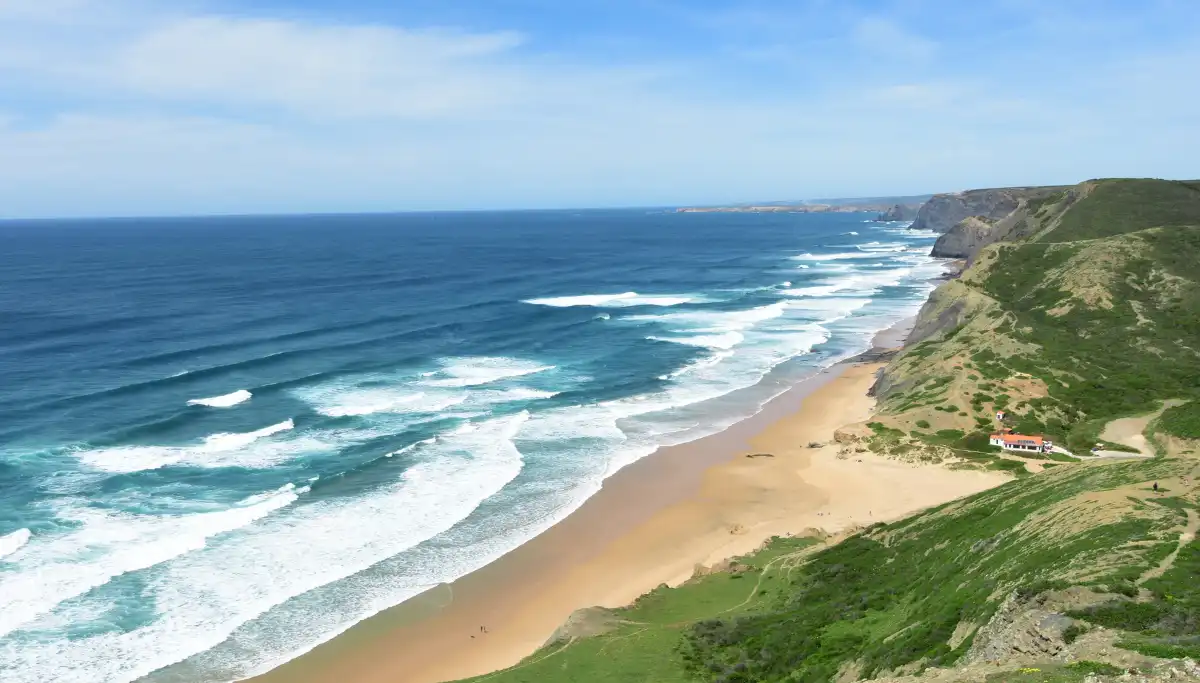
The Mzamba Fossils and Petrified Forest: The Wild Coast's Ancient Secret
When I first heard people in Mtentu talk about the 'stone trees', I thought it was local legend. Then I saw them: petrified trunks and shells glinting in the sand at the Mzamba River Mouth.
 Allan Hein27 October 2025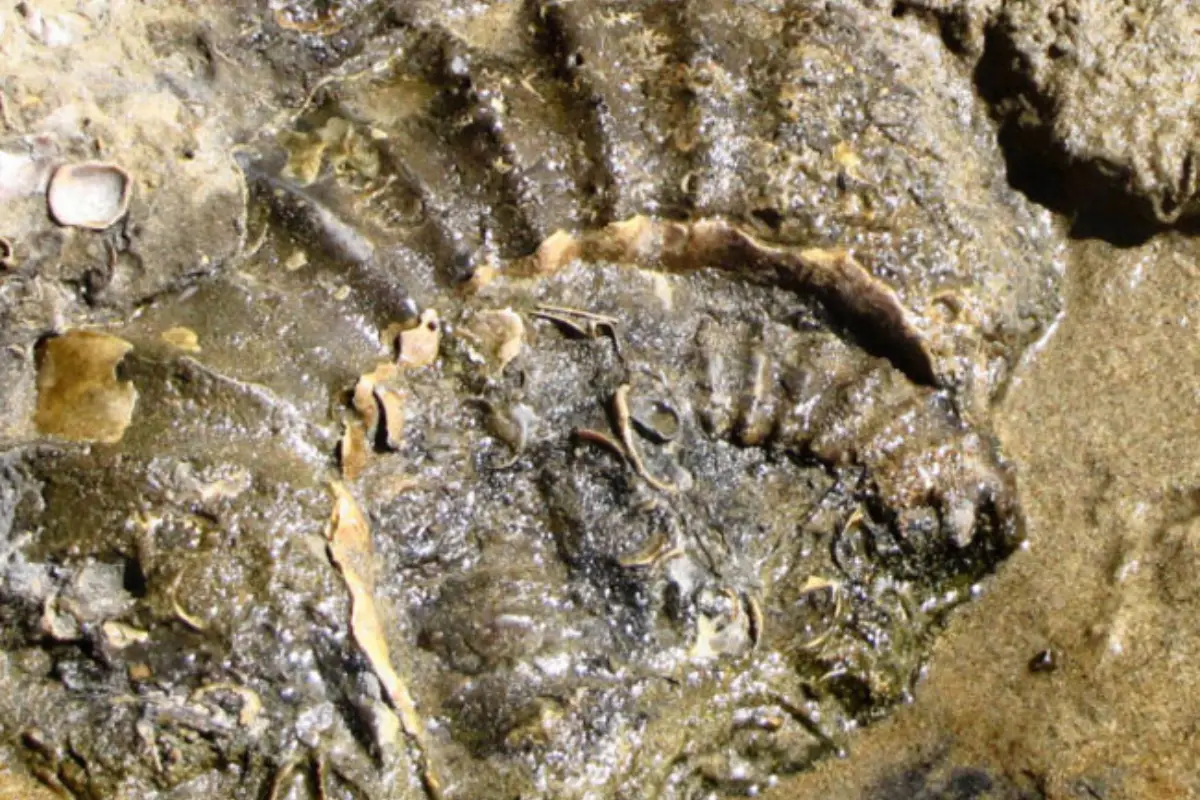
When I first heard people in Mtentu talk about the “stone trees,” I thought it was just a bit of local legend. Then one day, I saw them for myself, long, petrified trunks and shells glinting in the sand as the tide slipped away. Just beyond the Mzamba River Mouth, the earth opens its memory for a few short hours, and what it shows is nothing short of astonishing.
Most hikers walk right past it without knowing. But when the tide retreats and the sea draws a breath, the sand pulls back to reveal a hidden world, fossilised trees and sea creatures turned to stone, scattered along the reef and pressed into the cliffs.
Table of Contents
The Ancient Shoreline Beneath Our Feet
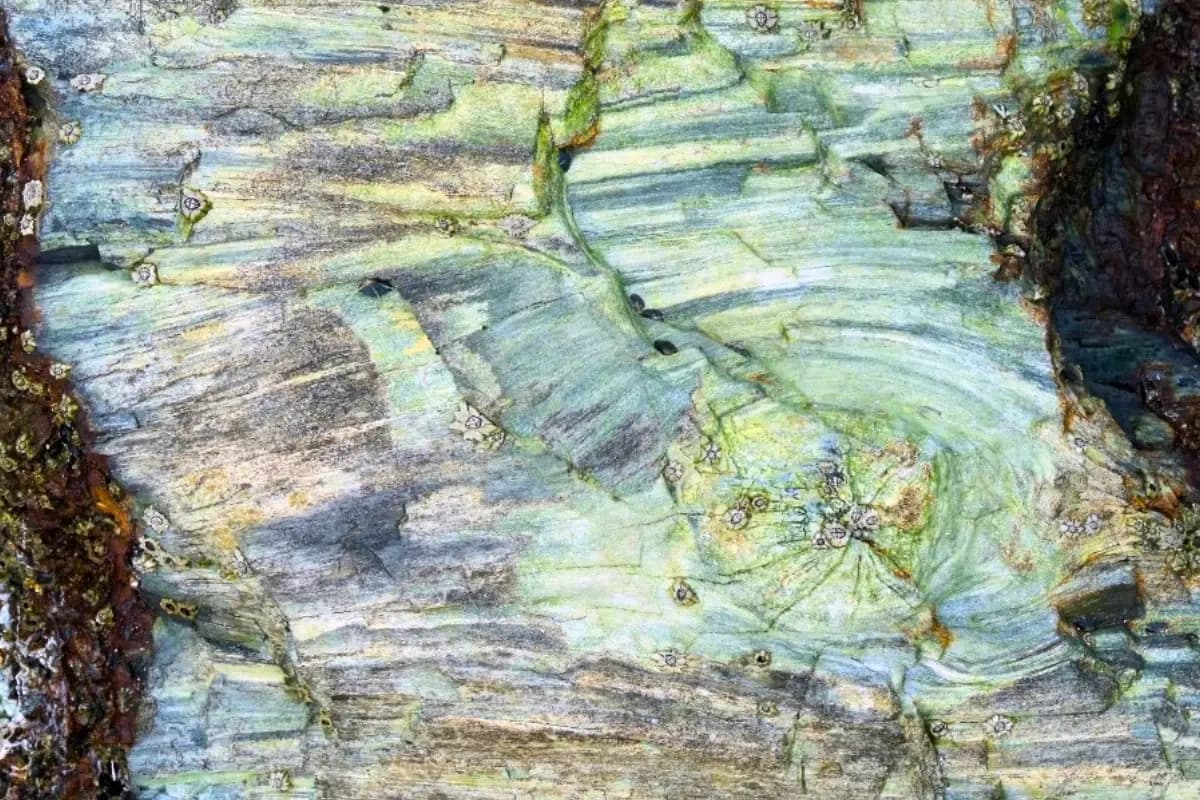
Close-up of layered striated fossil sandstone exposed at low tide at Mzamba Fossil Beds, Wild Coast South Africa
Locals call them the Mzamba Fossil Beds, though they’re sometimes known as the Petrified Forest, a name that hints at what once was. Long before there was a coastline here, rivers carried wood and sediment into a warm, shallow sea that stretched across what is now the Wild Coast. Over millions of years, those pieces of driftwood were buried and slowly transformed, their fibres replaced by minerals until only stone remained. Around them settled the creatures of an ancient ocean: coral, shells, ammonites, sea urchins, and even fragments of turtle shell, all preserved in the rock like a page from Earth’s diary.
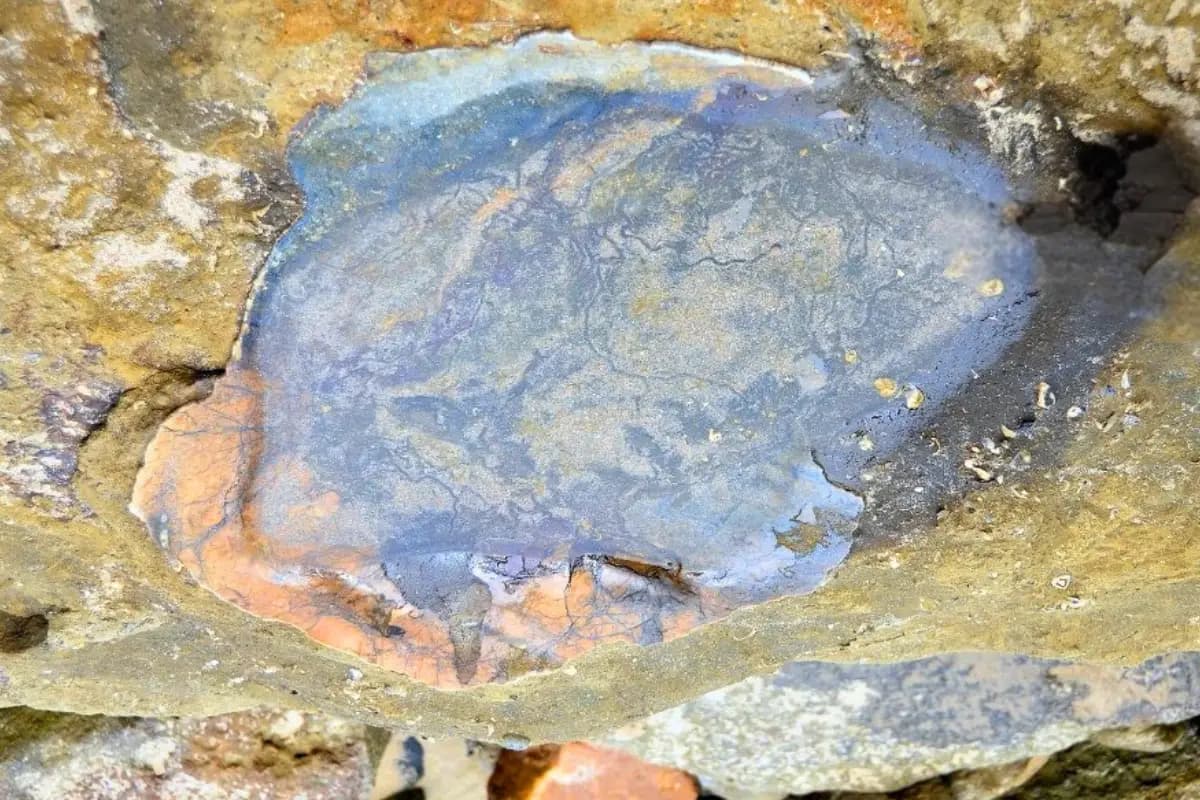
Fossilised tortoise shell embedded in layered sandstone rock at the Mzamba Fossil Beds on South Africa's Wild Coast
At high tide, the ocean hides this history beneath its restless surface. But when the water recedes, the reef gleams with sunlight, revealing bands of fossil-rich sandstone and silicified wood that resemble bark and bone. Each line in the rock marks another layer of time, sediments laid down during the Late Cretaceous Period, more than 80 million years ago, when dinosaurs still roamed inland and Africa itself was slowly taking shape as part of the southern supercontinent Gondwana.
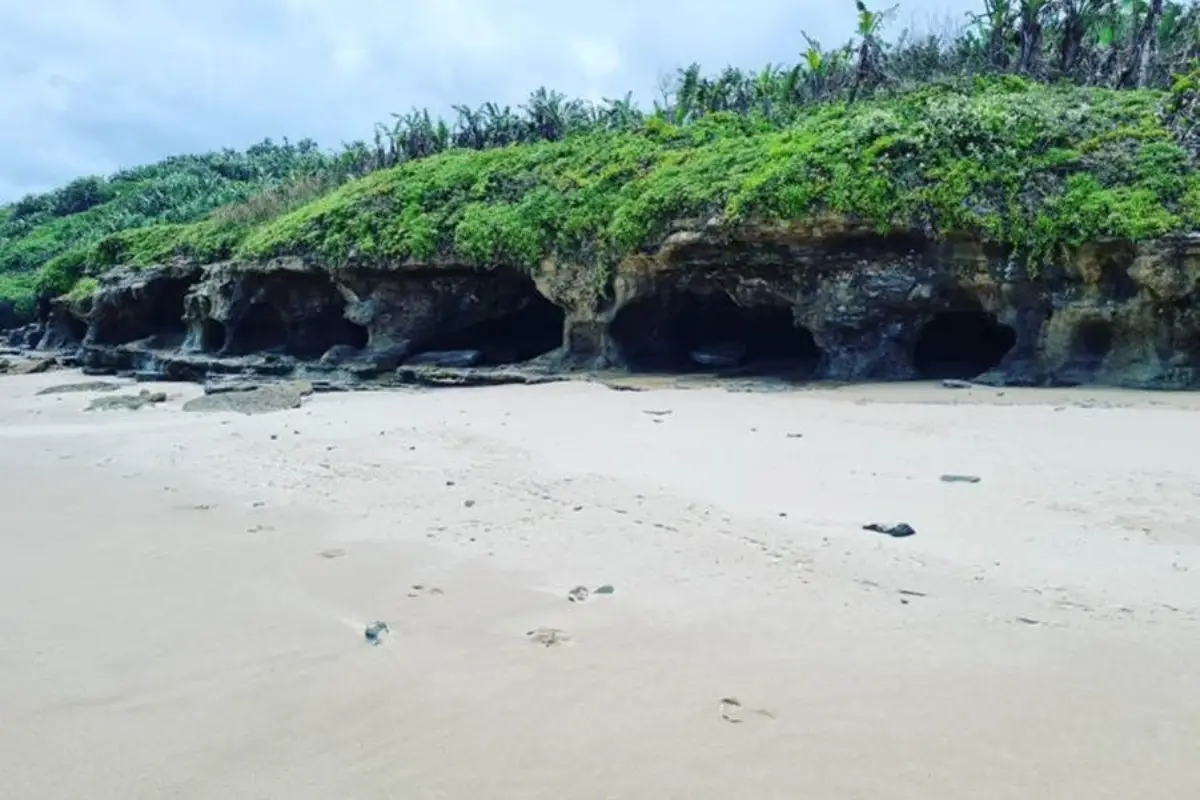
Row of cave openings known as White Man's Caves cut into low sandstone cliffs along Mzamba beach, Wild Coast South Africa
The nearby White Man’s Caves rise from the same ancient strata, their ceilings and walls embedded with marine fossils that once formed part of a living reef. Here, the past feels tangible: you can trace your fingers across the polished surface of a tree trunk turned to quartz, a remnant from a world where sea and forest once met.
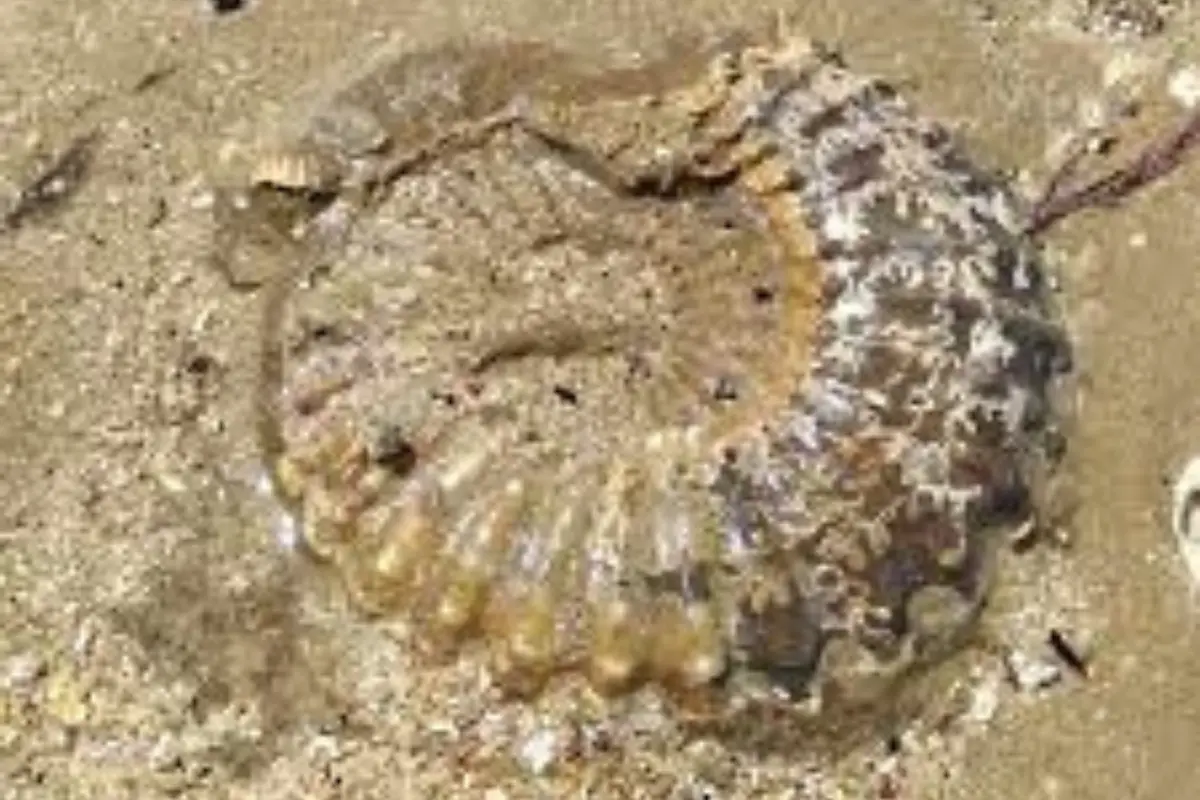
Spiral ammonite fossil lying in sandy beach sediment at the Mzamba Fossil Beds on the Wild Coast of South Africa
Standing at the edge of the tide, it’s easy to imagine this coastline as it was, a meeting place of water, wood, and time, where stone holds the memory of a vanished sea.
How to Experience It
Row of cave openings known as White Man's Caves cut into low sandstone cliffs along Mzamba beach, Wild Coast South Africa
If you’re walking the Mtentu Ramble, you don’t need a separate trip to see the fossils, just good timing and a local guide. Most of our guides know exactly where to go, and they’ll tell you stories along the way: how the trees once stood upright, how storms uncovered new sections, and how each season changes what the sea reveals.
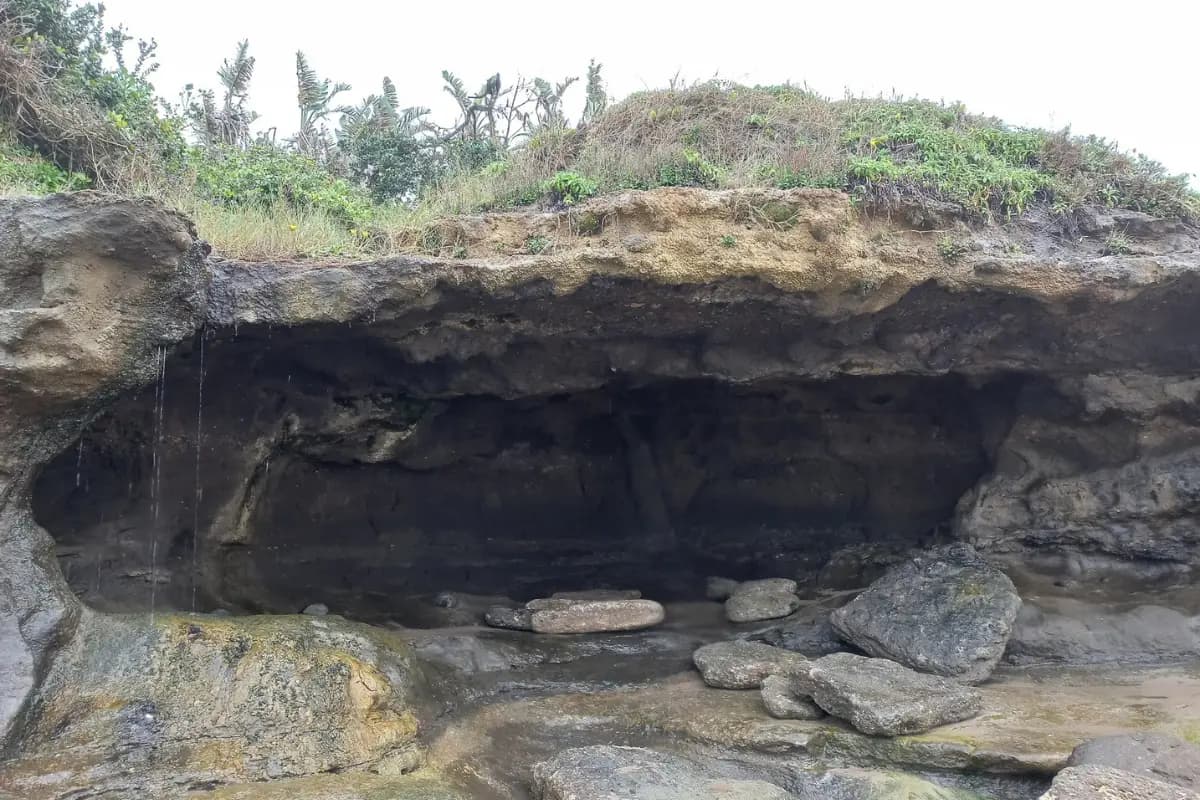
Large rock overhang forming a cave with boulders on the floor at Mzamba coastline, Wild Coast Eastern Cape
Because everything depends on the tide, your guide will usually decide whether to head for the fossil reef or take the Mzamba Pedestrian Bridge across the river. Both routes are worth doing if you can.
If you want to learn more about the Mzamba Pedestrian Bridge, how it was built, why it’s so impressive, and what it’s like to cross it on foot, check out our full article here.
And if you’re keen to experience the Mtentu Ramble Hike yourself, you’re in luck, our daughter, Kelly, actually runs the hike here in Mtentu! You can find all the details, routes, and booking info in our full Mtentu Ramble guide here.
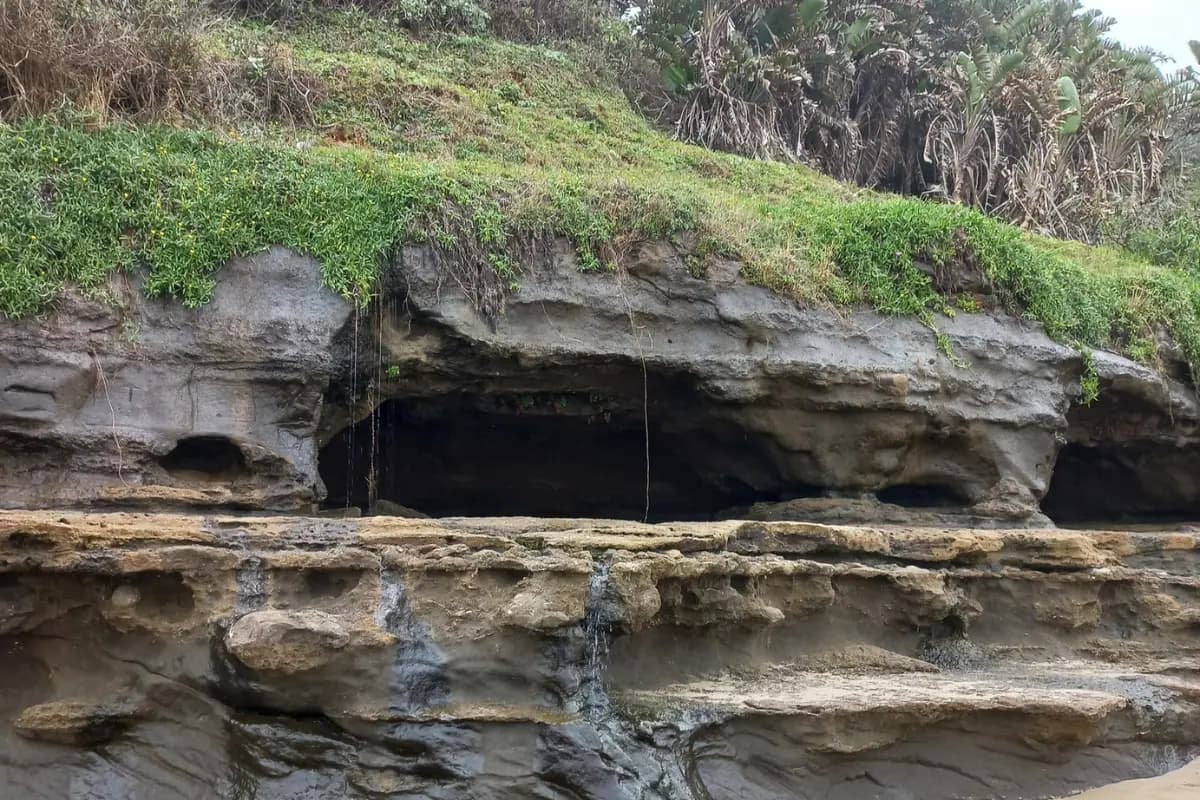
Layered sandstone cliff face with cave opening and clear sedimentary strata at Mzamba, Wild Coast South Africa
As you can see in the photo above, the fossil site sits quite far from the bridge, adding several extra kilometres to the walk. It’s not a short detour, but it’s one you won’t regret. The bridge gives you height and perspective; the fossil beds let you walk through time itself.
We found an incredible YouTube video of Benny on Carte Blanche showcasing the fossils.
But if you’re not doing the hike and only want to experience the fossils, there’s another option. Local guide Benny Mbotho, based near the Wild Coast Sun, runs dedicated Mzamba Fossil and Petrified Forest tours that leave at 9 a.m. daily, weather and tides permitting. His walks begin on the beach south of the resort and lead to the fossil reef and White Man’s Caves, where visitors can see silicified wood, ammonites, coral, and even fossilized turtle shell embedded in the rock. Benny’s knowledge and enthusiasm bring the ancient shoreline to life, and at low tide, he’ll show you how to trace the rings of trees that turned to stone more than 80 million years ago. You can book your tour with Benny here.
Planning to join a fossil tour with local guide Benny Mbotho? Here’s a map of accommodation nearby, ideal for anyone wanting to explore the Mzamba Fossil Beds and surrounding Wild Coast highlights.
A Hidden Layer of the Wild Coast
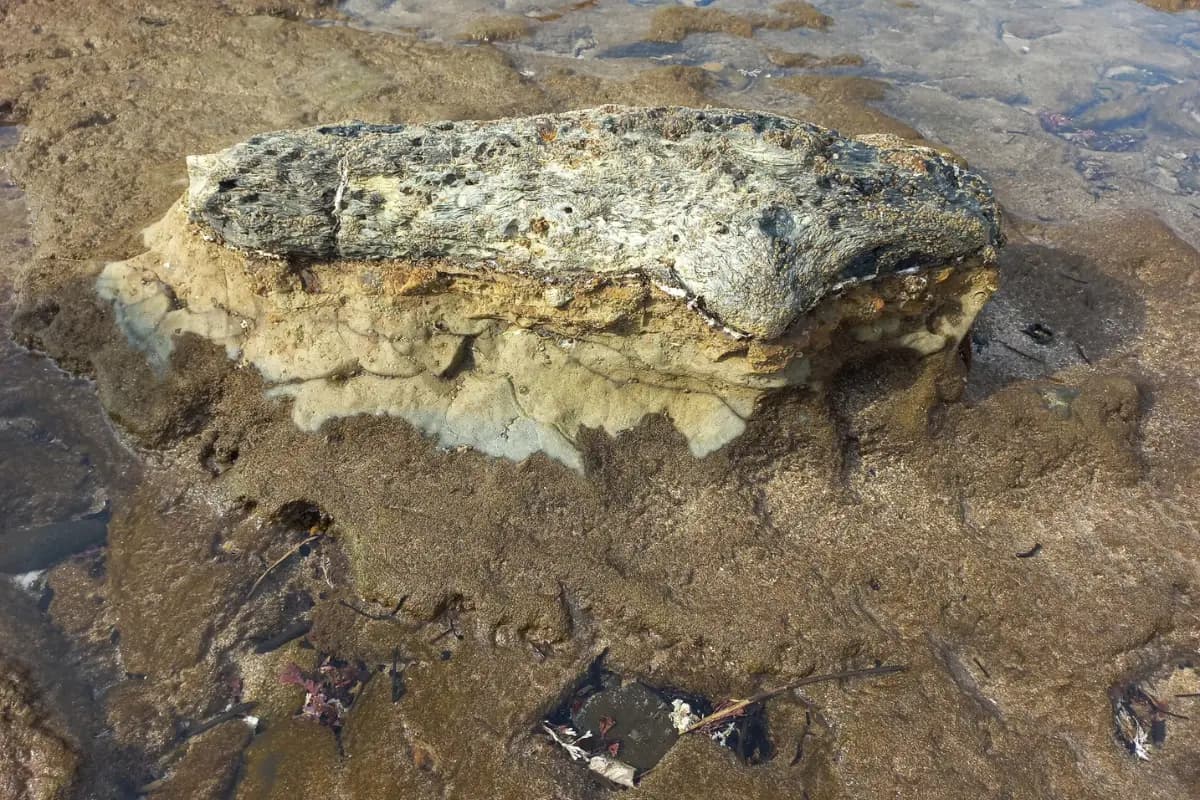
Ancient petrified log exposed at low tide at the Mzamba Fossil Beds on South Africa's Wild Coast
People here have been aware of the “stone trees” for generations. Long before scientists came to study them, children played among them, and fishermen used them as markers when reading the tides.
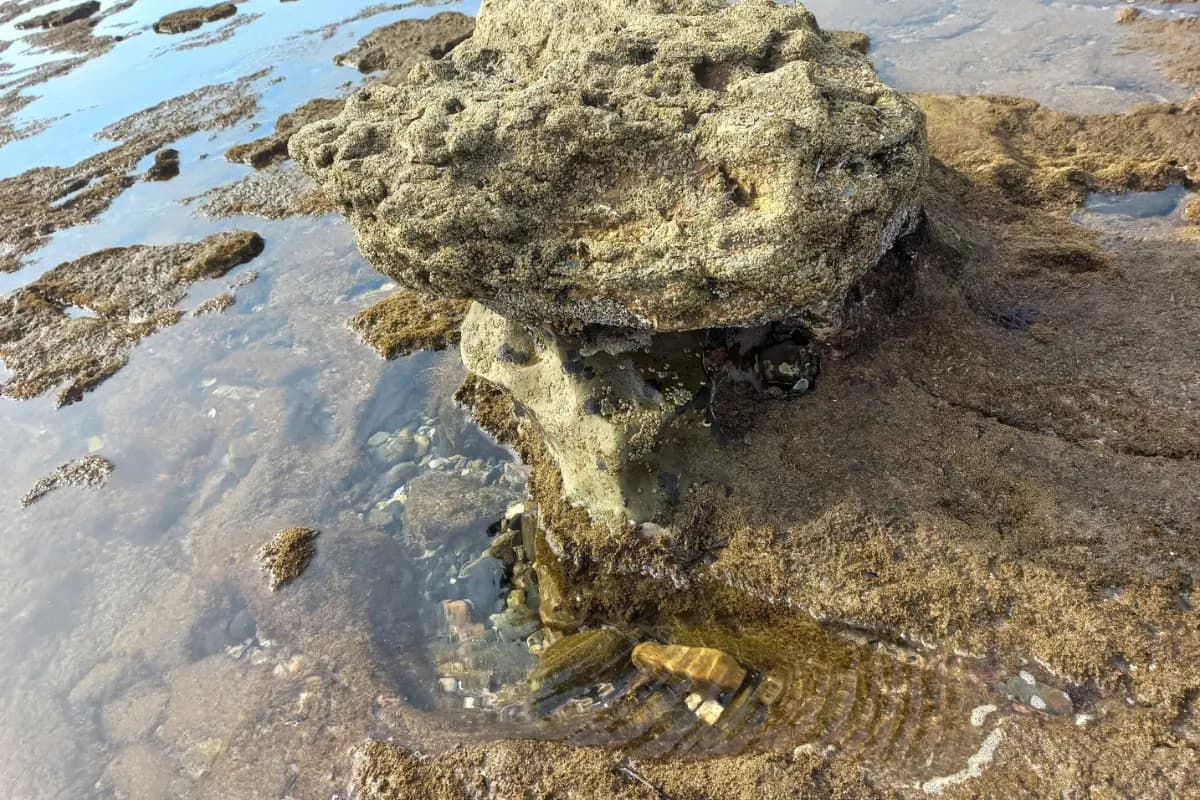
Barnacled fossil rock formation rising from shallow tidal water at the Mzamba Fossil Beds on South Africa's Wild Coast
Geologists now say the fossils date back more than 80 million years, which makes them some of the oldest of their kind in southern Africa. To stand among them is to feel time slow down, from the crash of the waves to the steady patience of rock.
FAQs
How old are the Mzamba fossils?
More than 80 million years old, dating to the Late Cretaceous Period, which makes them some of the oldest of their kind in southern Africa.
What can you see at the Mzamba Fossil Beds?
Silicified and petrified wood that resembles bark and bone, along with ammonites, coral, shells, sea urchins, and even fragments of turtle shell, plus the marine fossils embedded in the nearby White Man's Caves.
When can you see the Mzamba fossils?
At low tide. At high tide the ocean hides them, but when the water recedes the reef is exposed, revealing the fossil-rich sandstone and silicified wood.
Can you visit the fossils without doing the Mtentu Ramble?
Yes. Local guide Benny Mbotho, based near the Wild Coast Sun, runs dedicated Mzamba Fossil and Petrified Forest tours that leave at 9 a.m. daily, weather and tides permitting, beginning on the beach south of the resort.
Final Thoughts
Living in Mtentu, I’ve learned that the Wild Coast keeps its secrets until you slow down enough to notice them. The Mzamba Fossil Beds are one of those quiet wonders, easy to miss, unforgettable once seen.
If you walk the Mtentu Ramble, ask your guide about the fossils and the White Man’s Caves. Time your visit with the tide, take care on the rocks, and keep your eyes open. Because here, the land doesn’t just hold history, it remembers it.
Read our latest blog: Shipwrecks on the Wild Coast | A Local’s Ramble Through 500 Years of Wrecks and Wonders
Some links in this article are affiliate links. If you book through them, we may earn a small commission at no extra cost to you. This helps support the Mtentu Ramble.
Ready to Experience This Yourself?
The Wild Coast is waiting. Book your guided hike with Mtentu Ramble and create memories that will last a lifetime.