What to Budget for a South Africa Hiking Holiday
An honest breakdown of what a South Africa hiking holiday actually costs: flights, transfers, accommodation, guided hikes, food, and tips. Written for travellers coming from the UK, Europe, and the USA.
 Allan Hein8 July 2026
The question I get asked most by people overseas is not about fitness, or safety, or snakes. It is some version of: what is this actually going to cost me?
It is a fair question and a surprisingly hard one to find answered honestly. Tour operators quote you their own price and go quiet about everything else. So here is the whole picture, including the parts that are not our money.
The headline: South Africa is one of the best-value hiking destinations in the world for anyone earning in pounds, euros, or dollars. Not because it is cheap and rough, but because the exchange rate means a genuinely good trip costs a fraction of what the equivalent would cost in the Alps, Patagonia, or New Zealand.
Table of Contents
- The Short Answer
- How much does a South Africa hiking holiday cost?
- How much does the Mtentu Ramble cost?
- What will you spend on accommodation, food, and gear?
- How much should you tip in South Africa?
- Do you need a visa, insurance, and vaccinations?
- What do three sample budgets look like?
- Where do people overspend?
- FAQs
The Short Answer
Your international flight is the single biggest cost; once you land, South Africa is exceptional value. The Mtentu Ramble is R4,700 per person for 2026 (R5,200 for 2027), all-inclusive of guiding, accommodation, all meals, permits, and transfers. Budget extra for flights, insurance, a night either side, tips, and cash for the trail.
How much does a South Africa hiking holiday cost?
The honest shape of it: your international flight is the biggest single cost by far, and once you have landed, everything else is exceptional value.
A note on exchange rates
Everything below is quoted in South African rand (ZAR), because that is what you will actually pay and because I am not going to pretend I know what sterling will be worth by the time you read this.
Check a live rate before you plan. The rand moves, and it has generally moved in favour of visitors over the past decade. That volatility is the single biggest reason South Africa keeps getting better value for international travellers, and the reason I would rather give you rand figures you can convert than pound figures that go stale.
For how to actually carry and spend money out here, read currency, SIM cards, and connectivity on the Wild Coast. The short version: once you leave Port Edward, there are no ATMs.
Flights: your biggest cost
Your flight will almost certainly cost more than everything else combined. This is the number that decides whether the trip happens.
Long-haul returns to Johannesburg or Cape Town from London, Frankfurt, or Amsterdam are typically the cheapest, because those routes carry the most competition. Flying into Durban (King Shaka International) usually means one connection, but Durban is by far the closest gateway to the Wild Coast and the connection is often worth more than the fare saving on a Johannesburg flight.
What actually moves the price:
- Season. South African school holidays and the European winter escape (December and January) are the expensive months. Our best hiking months, roughly March through August, are shoulder or low season for flights. This is a rare case where the best time to hike is also the cheapest time to fly.
- Booking window. Four to six months out is the usual sweet spot.
- Which airport you fly home from. Open-jaw tickets, in one city and out of another, often cost little more than a return and save you a long backtrack.
Budget realistically, get a live quote for your dates, and treat everything below as the small print. There is more detail on routes and airports on our flights page.
Getting to the trailhead
The Wild Coast has no airport of its own, which is a large part of why it is still the Wild Coast.
From Durban, the northern Wild Coast is a drive of a few hours south via the N2 and Port Edward. Your options:
- Shuttle service. The simplest and what most of our international guests use. Booked in advance, door to trailhead.
- Hire car. Gives you freedom before and after the hike, and secure parking is included on the Mtentu Ramble. Reckon on a mid-range hire car plus fuel. South African fuel is cheaper than European fuel.
- Domestic flight plus transfer. Mthatha and Margate have small airports.
Full detail on each option, including road conditions and why you should not trust your GPS on the last stretch, is in how to get to Mtentu.
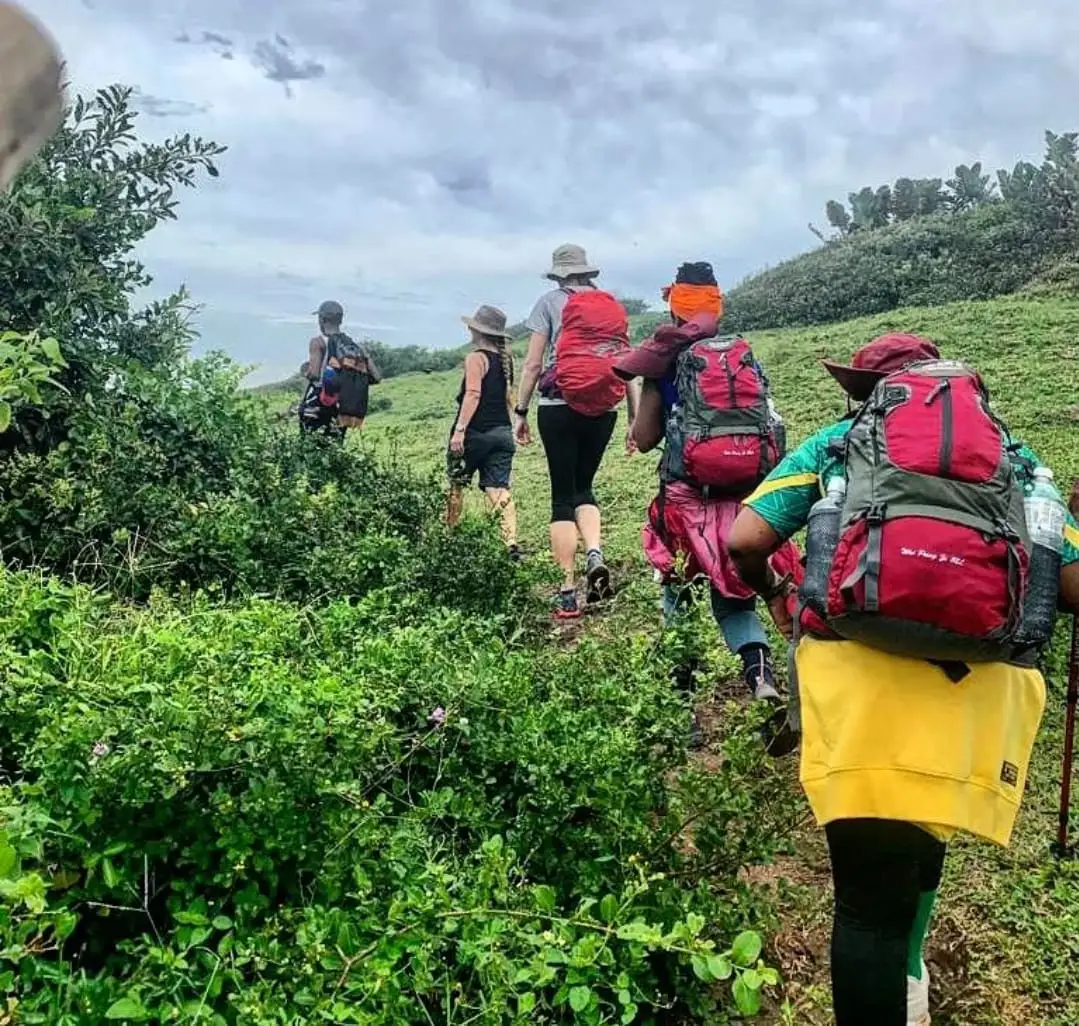
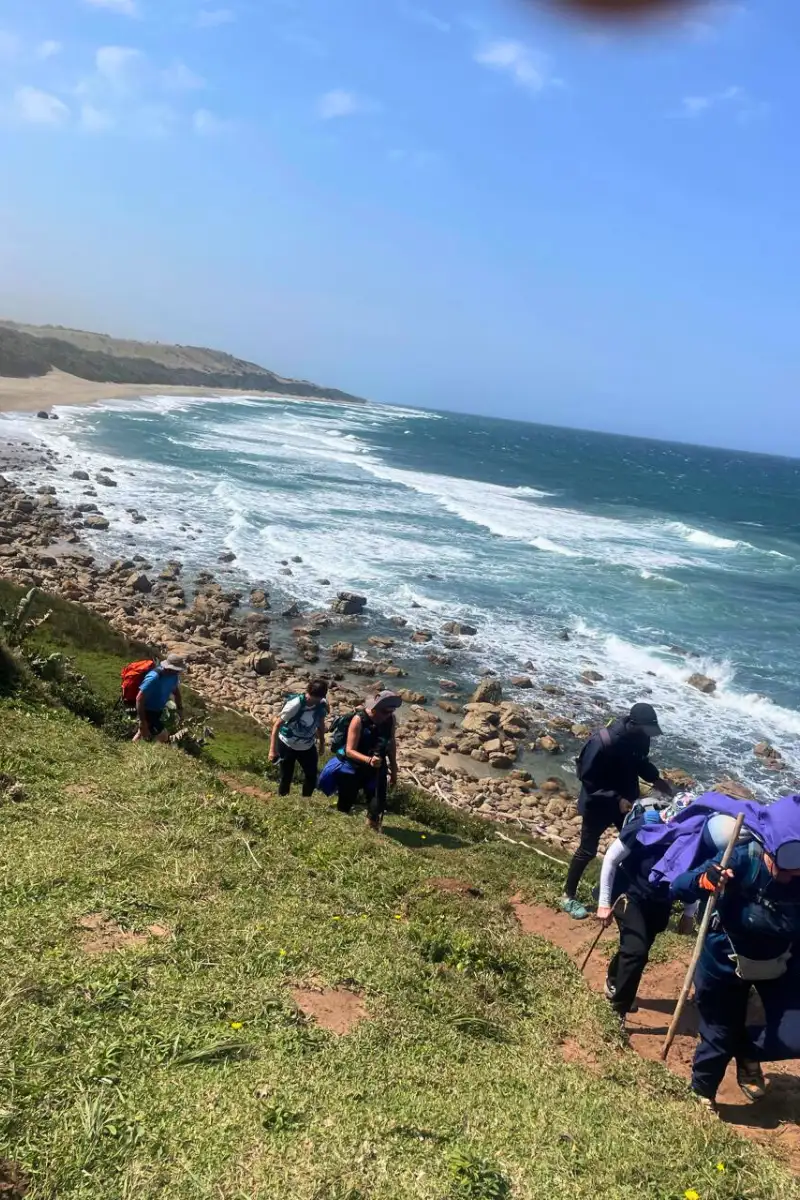
Group of hikers with backpacks on the Wild Coast trail, South Africa
How much does the Mtentu Ramble cost?
The Mtentu Ramble is R4,700 per person for 2026 departures, and R5,200 per person for 2027. Four days, three nights, and it is genuinely all-inclusive. Here I can be exact, because it is our price.
What that covers:
- All guiding, by local guides who grew up on this coast
- Three nights' accommodation (one night at a homestead, two at the Hiking Shack)
- Every meal: breakfast, lunch, and dinner, each day
- All permit fees
- The ferry fee
- Secure parking
- Return transfer on day four, back to where you started
- A branded cap, which people wear more than you would expect
What it does not cover:
- Alcoholic and soft drinks beyond what is provided
- Personal snacks
- Guide tips
- Wild Coast Sun parking, around R20
- Optional luggage transfer, R200 per person, cash only
A 50% deposit secures your booking, with the balance due 30 days before you walk.
That luggage transfer line is worth pausing on. For R200 you can walk with a daypack instead of a full pack. Most people who take it say it is the best two hundred rand they spent. Bring it in cash.
For context on how this compares to going it alone, the Otter Trail permit is R2,097 per person, before you have bought five days of food, hired a guide, or carried any of it. We did the full comparison in Mtentu Ramble vs the Otter Trail.
What will you spend on accommodation, food, and gear?
Less than you would expect. Off the hike, the middle of the South African range is excellent value, eating out works hard in your favour, and if you already hike you own most of the kit already. Here is each in turn.
Accommodation before and after
You will want at least one night either side of the hike. Nobody should land after eleven hours in the air and start walking the same week.
South African accommodation spans an enormous range, and the middle of that range is excellent value by European standards. A comfortable guesthouse or B&B room costs a fraction of the equivalent in the UK. Backpacker dorms are cheaper again. At the top end, lodges like Gwegwe Beach Lodge inside Mkambati are the kind of place you would pay considerably more for anywhere else in the world.
We keep a where to stay guide, and a detailed piece on the lodges and camps at Mkambati.
If you are extending your trip, what to do before and after the Mtentu Ramble covers the options and roughly what each adds to the bill.
Food and drink
On the hike, food is included and there is a lot of it. You will not go hungry, and you will eat better than you expect. See traditional cuisine in Pondoland.
Off the hike, eating out in South Africa is where the exchange rate hits hardest in your favour. A good restaurant dinner costs what a pub lunch costs in Britain. A very good bottle of South African wine costs what a mediocre one costs in Europe. Budget generously and enjoy yourself; this is not the line item to economise on.
Carry cash for the trail. Tips, drinks, the luggage transfer, and anything you buy in a village all need it, and there is no card machine.
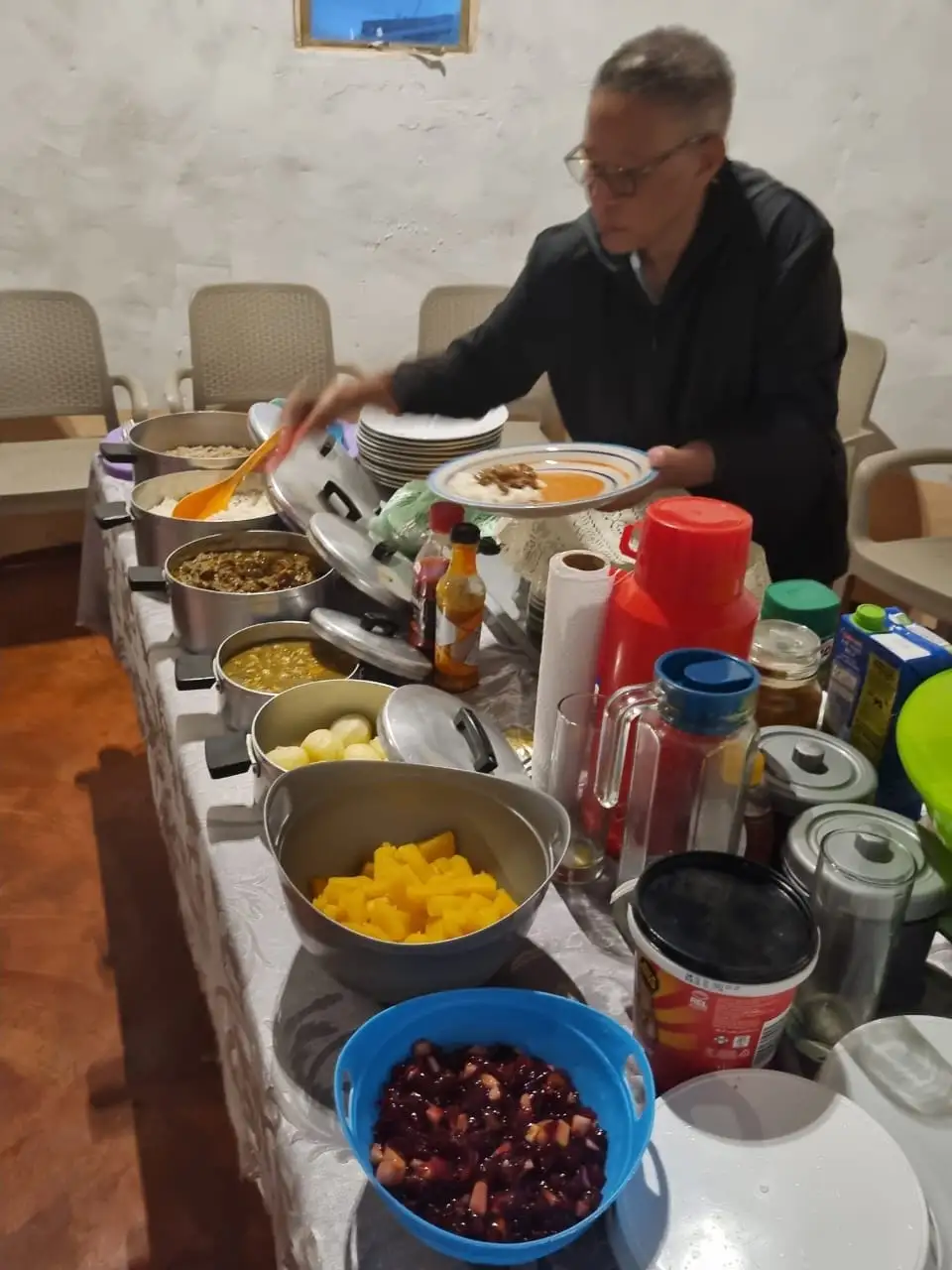
Traditional Pondoland meal being served, Wild Coast South Africa
Gear
If you already hike, you already own what you need. The Mtentu Ramble is not a technical trail. No crampons, no ropes, no specialised kit.
If you are starting from nothing, the real costs are boots, a decent daypack, and a rain shell. Everything else can be borrowed or bought cheaply. Bedding is provided at both the homestead and the Hiking Shack, which removes the single most expensive item on most hiking gear lists.
Buy your boots at home, months before you travel, and walk them in. Blisters on day one are the one genuinely avoidable way to ruin this trip. Full list in what to pack for a multi-day hike in South Africa, and our trail gear guide.
How much should you tip in South Africa?
Ten to fifteen percent in restaurants, and whatever feels fair for your hiking guides. Tipping is customary in South Africa and it matters here more than it does in most places, because the money goes directly into a rural economy with very little else coming into it. See how tourism supports local communities on this coast.
In restaurants, ten to fifteen percent is standard. For guides on a multi-day hike, use your judgement based on the group and the service; it is not obligatory, and it is always noticed. Bring it in cash, in rand, in small notes.
Do you need a visa, insurance, and vaccinations?
Many nationalities, including British, EU, and US citizens, do not require a visa for short tourist stays in South Africa. Rules change, so check the official South African government guidance for your passport rather than trusting a blog, including this one.
Travel insurance is not optional here. The Wild Coast is remote, you will be hours from a hospital, and you want medical evacuation cover. Buy a policy that explicitly covers multi-day hiking. It is one of the cheapest things on this entire list and the only one you will bitterly regret skipping.
No vaccinations are required for South Africa from most countries. The Wild Coast is not a malaria area, so no prophylactics are needed. Check current advice for your own country before you fly.
What do three sample budgets look like?
These are illustrative, they exclude flights, and they assume two people sharing. Costs are per person in rand.
The lean trip. Fly into Durban, shuttle to the trailhead, one budget night either side, do the hike, fly home. You are looking at the R4,700 hike price plus transfers, two nights' budget accommodation, some meals, and cash for tips. This is a genuinely cheap week once you have landed.
The comfortable trip. Hire car, a nice guesthouse either side, take the luggage transfer, eat well, add two or three nights somewhere lovely afterwards. Still less than a comparable week in Western Europe, by a wide margin.
The full South Africa trip. Two to three weeks, the Wild Coast hike as the centrepiece, plus Durban, the Drakensberg, or a Kruger safari. Here the safari and the internal flights, not the hiking, dominate the budget.
The pattern across all three: the flight is the trip's real cost, and once you are here, your money goes remarkably far. Which is an argument for staying longer rather than shorter.
How South Africa compares
Set the all-inclusive Mtentu Ramble price against what a four-day guided, catered, fully supported hike costs in the Alps, Norway, Patagonia, or New Zealand, and the difference is not marginal. It is severalfold.
You are not trading down for that. You get local guides, private homestay accommodation, every meal cooked for you, a maximum of twelve people, and a coastline most South Africans have never walked. The saving comes from the exchange rate, not from cutting corners.
Where do people overspend?
Buying gear they do not need. You are walking a moderate coastal trail, not a Himalayan traverse. Read the packing list before you shop.
Flying into Johannesburg because the fare looked cheap. Then discovering the drive. Price the Durban route properly before you decide.
Booking a rental car for the hike days. It sits in a car park while you walk. If you are not touring before or after, take the shuttle.
Skipping the luggage transfer to save R200. Then carrying a full pack over 17 kilometres of sand on day one.
Not bringing enough cash. There is no ATM. This costs you nothing directly and is enormously annoying.
FAQs
How much does the Mtentu Ramble cost?
R4,700 per person for 2026 departures and R5,200 per person for 2027. That is all-inclusive: guiding, three nights' accommodation, all meals, permits, ferry fee, secure parking, and the return transfer on day four. A 50% deposit secures your booking and the balance is due 30 days before the hike.
Is South Africa expensive for hiking holidays?
No. For travellers earning in pounds, euros, or dollars, South Africa is among the best-value hiking destinations in the world. A guided, catered, four-day hike here costs a fraction of the equivalent in the Alps or New Zealand. Your international flight will be the largest single cost of the trip.
What is not included in the Mtentu Ramble price?
Alcoholic and soft drinks beyond what is provided, personal snacks, guide tips, Wild Coast Sun parking of about R20, and the optional luggage transfer at R200 per person. The luggage transfer is cash only.
How much cash should I bring on the Wild Coast?
Enough for tips, drinks, the R200 luggage transfer, and anything you buy in the villages. There are no ATMs or card machines once you leave Port Edward, so draw cash before you head south. See our guide to currency and connectivity.
Do I need travel insurance for a Wild Coast hike?
Yes. The trail is remote and you will be hours from a hospital. Buy a policy that explicitly covers multi-day hiking and includes medical evacuation. It is inexpensive and it is the one thing on your budget you should not cut.
Do I need a visa to visit South Africa?
Many nationalities, including British, EU, and US citizens, do not need a visa for short tourist visits. Requirements change, so always check the official South African government guidance for your passport before booking flights.
When is the cheapest time to hike in South Africa?
The months that are best for hiking the Wild Coast, roughly March through August, fall outside peak flight season. Autumn and winter give you dry, mild, clear conditions and cheaper airfares at the same time.
---
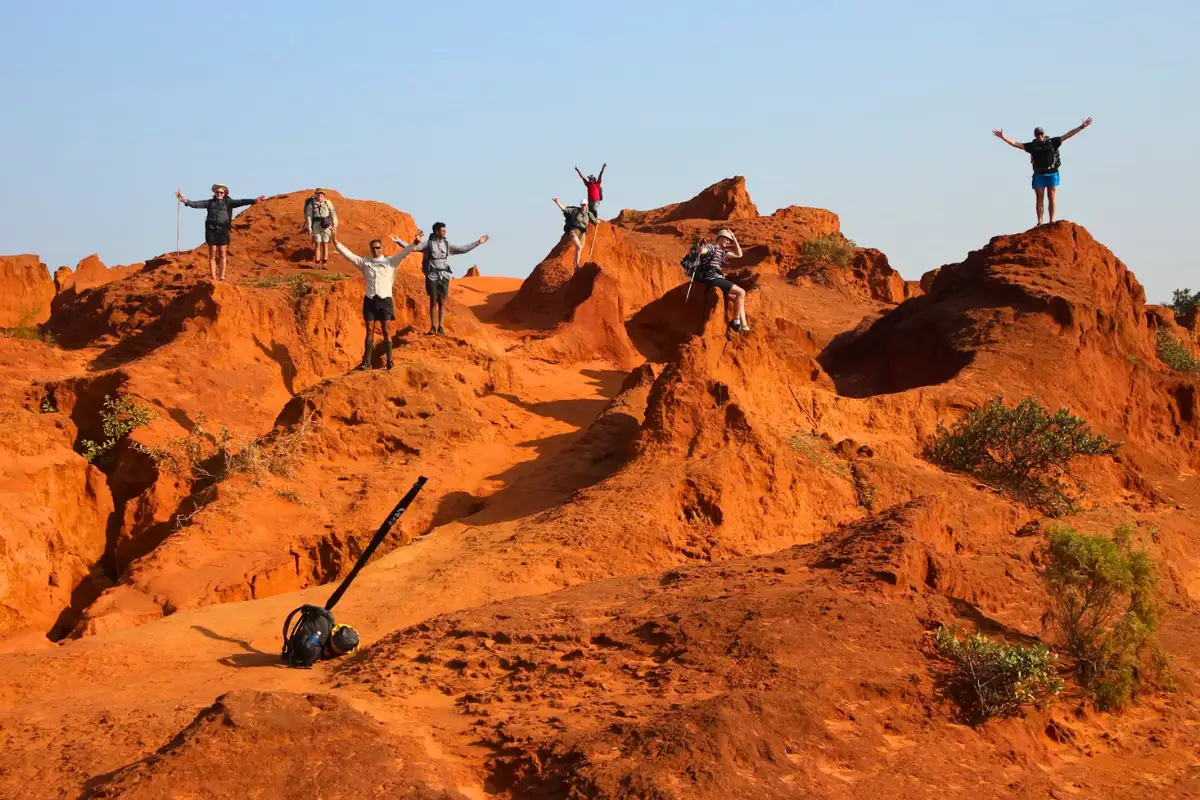
Hikers celebrating with arms raised on the Wild Coast, South Africa
If you have been putting this trip off because you assumed it was out of reach, do the maths properly. Most people are surprised.
Our 2026 dates are R4,700 per person, all-inclusive, with a 50% deposit to hold your place.
Ready to Experience This Yourself?
The Wild Coast is waiting. Book your guided hike with Mtentu Ramble and create memories that will last a lifetime.